
For many young adults in Singapore, the occasional backache is often dismissed as a minor inconvenience, a result of long hours at the desk, intense workouts, or simply the stresses of modern life. However, when back pain persists, especially if it begins in your 20s and exhibits specific characteristics, it warrants closer attention. Ignoring these signals could mean overlooking a potentially serious, chronic inflammatory condition known as Ankylosing Spondylitis (AS). This often-misunderstood disease affects thousands globally, including a significant number of Singaporeans, yet its early symptoms are frequently mistaken for more common musculoskeletal issues. Understanding AS, its unique presentation, and the critical importance of early diagnosis is paramount for preserving long-term spinal health and quality of life.
The purpose of this article is to provide accurate, trustworthy information to Singaporeans aged 25-65 about Ankylosing Spondylitis. We aim to equip you with the knowledge to identify the subtle yet distinct signs of AS, understand its progression, and empower you to seek timely medical attention from qualified healthcare professionals in Singapore. By distinguishing inflammatory back pain from mechanical back pain, we hope to shed light on why persistent discomfort in your younger years should never be ignored.
Understanding Ankylosing Spondylitis: More Than Just Backache
What is Ankylosing Spondylitis?
Ankylosing Spondylitis (AS) is a chronic, systemic inflammatory disease primarily affecting the spine and the sacroiliac (SI) joints, which connect your spine to your pelvis. It is a type of inflammatory arthritis that belongs to a group of conditions called spondyloarthritis. Unlike mechanical back pain, which typically results from injury or overuse, AS is an autoimmune condition, meaning the body’s immune system mistakenly attacks its own healthy tissues, leading to inflammation.
The hallmark of AS is chronic inflammation in the spinal joints and surrounding tissues. Over time, this persistent inflammation can lead to structural changes, including erosion, new bone formation, and eventually, the fusion (ankylosis) of vertebrae. This fusion can result in significant stiffness and a loss of spinal mobility, leading to a hunched posture if left untreated. While the spine and SI joints are most commonly affected, AS can also impact other joints, tendons, ligaments, and even internal organs.
The Distinctive Symptoms of AS in Early Adulthood
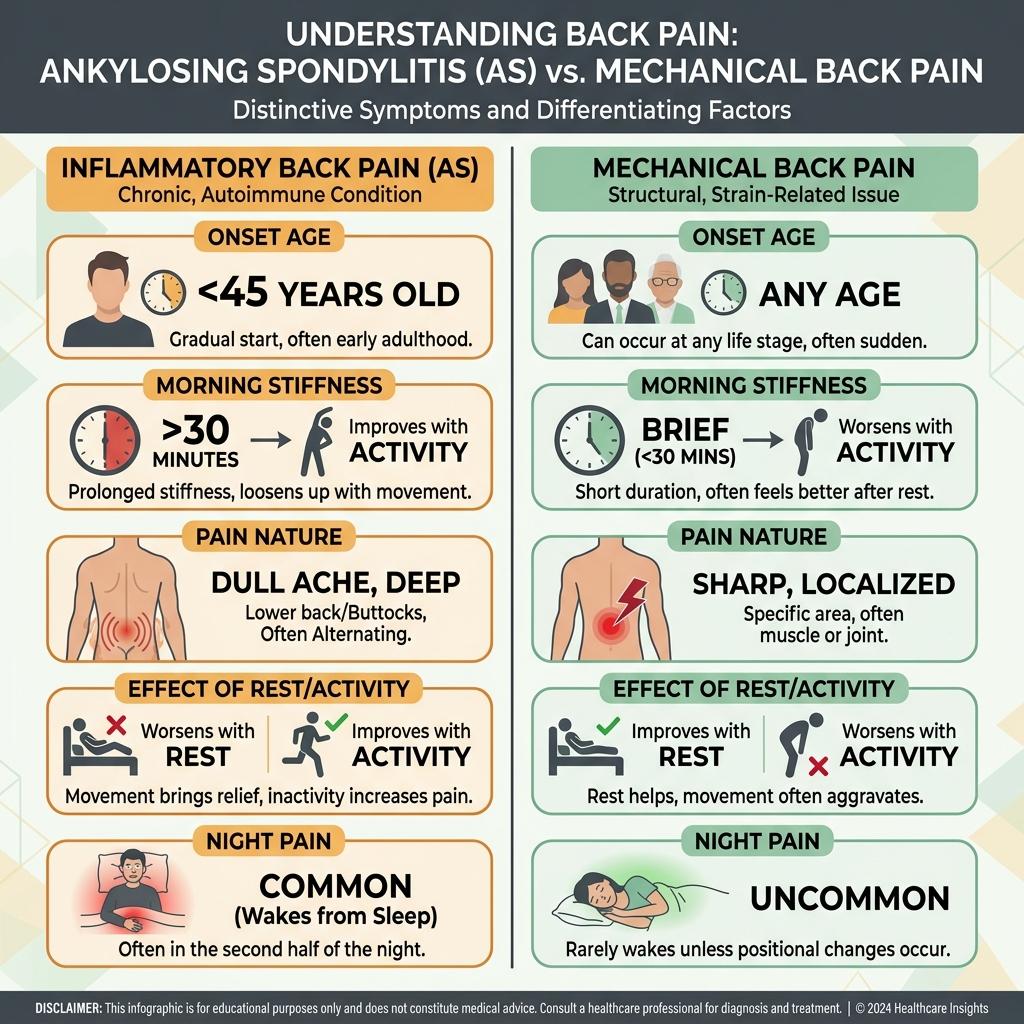
Identifying AS in its early stages is challenging because its symptoms often mimic common back pain. However, there are crucial distinctions, particularly relevant for young adults in their 20s. Inflammatory back pain, characteristic of AS, differs significantly from typical mechanical back pain.
- Onset: Inflammatory back pain typically begins subtly before the age of 45, often in the late teens or 20s, whereas mechanical back pain can occur at any age due to injury or strain.
- Morning Stiffness: A key indicator of AS is prolonged morning stiffness, lasting for at least 30 minutes, and often several hours. This stiffness tends to improve with physical activity and worsens with rest or immobility. Mechanical back pain usually improves with rest.
- Nature of Pain: The pain associated with AS is often a dull ache, particularly in the lower back and buttocks, and can sometimes radiate down the back of the thighs, though usually not below the knees. It can be bilateral, affecting both sides of the body.
- Activity and Rest: Inflammatory back pain improves with exercise and activity but often worsens after periods of inactivity, such as sleeping or prolonged sitting. Mechanical pain typically worsens with activity and improves with rest.
- Night Pain: Individuals with AS often experience back pain that wakes them from sleep, particularly in the second half of the night.
Beyond spinal pain and stiffness, AS can manifest with other symptoms:
- Fatigue: Persistent, overwhelming tiredness is a common symptom, often disproportionate to activity levels.
- Peripheral Arthritis: Inflammation in other joints, such as the hips, knees, ankles, or shoulders, can occur.
- Enthesitis: This is inflammation where tendons or ligaments attach to bone. Common sites include the Achilles tendon (causing heel pain) or the plantar fascia (causing foot pain).
- Uveitis: Inflammation of the eye, causing pain, redness, and sensitivity to light, can affect up to 40% of AS patients.
- Psoriasis and Inflammatory Bowel Disease (IBD): Some individuals with AS may also develop these conditions.
For young Singaporeans, it is important to differentiate these symptoms from those caused by sports injuries, poor posture from prolonged computer use, or even less common conditions like spinal infections or tumours. The persistent, inflammatory nature of the pain, coupled with morning stiffness and improvement with activity, should raise a red flag and prompt a visit to a general practitioner or a rheumatologist.
The Silent Progression: Why Early Diagnosis is Crucial
The Genetic Link: HLA-B27 and its Significance
While the exact cause of Ankylosing Spondylitis remains unknown, a strong genetic predisposition has been identified. The most significant genetic marker associated with AS is the human leukocyte antigen B27 (HLA-B27) gene. Approximately 90-95% of Caucasians with AS carry the HLA-B27 gene. In Singapore, studies indicate a lower but still significant prevalence of HLA-B27 in AS patients across different ethnic groups, including Chinese, Malay, and Indian populations.
It is important to understand that carrying the HLA-B27 gene does not mean an individual will definitely develop AS. Many people with HLA-B27 never develop the condition. However, its presence significantly increases the risk, especially if there is a family history of AS or other spondyloarthropathies. The interaction between genetic factors, environmental triggers (such as infections), and immune system dysregulation is believed to contribute to the development of AS.
Diagnostic Journey: From Symptoms to Confirmation
The path to an AS diagnosis can be lengthy, often taking years due to the insidious onset of symptoms and their resemblance to more benign back conditions. However, early diagnosis is critical to prevent irreversible structural damage to the spine and improve long-term outcomes.
The diagnostic process in Singapore typically involves a combination of:
- Clinical Assessment: A thorough medical history focusing on the characteristics of back pain, duration, associated symptoms, and family history. A physical examination will assess spinal mobility, posture, and tenderness over the sacroiliac joints.
- Blood Tests:
- Inflammatory Markers: Erythrocyte Sedimentation Rate (ESR) and C-reactive protein (CRP) levels may be elevated, indicating active inflammation in the body. However, these can be normal in some AS patients.
- HLA-B27 Testing: While not a definitive diagnostic test on its own, a positive HLA-B27 test in conjunction with characteristic symptoms and imaging findings strongly supports a diagnosis of AS.
- Imaging Studies:
- X-rays: Standard X-rays of the pelvis and spine are crucial for detecting changes in the sacroiliac joints (sacroiliitis), which are a hallmark of AS. These changes include erosions, joint space narrowing, and eventual fusion. However, X-ray changes may not be evident until later stages of the disease.
- Magnetic Resonance Imaging (MRI): MRI of the sacroiliac joints and spine is highly sensitive and can detect early inflammatory changes (e.g., bone marrow oedema) that are not yet visible on X-rays. This makes MRI invaluable for early diagnosis, especially in young adults with suspected AS who have normal X-rays.
Given the complexity, it is vital for individuals in Singapore experiencing persistent inflammatory back pain to be referred to a rheumatologist. A rheumatologist is a specialist physician trained in diagnosing and managing musculoskeletal and autoimmune diseases, including Ankylosing Spondylitis. Their expertise is crucial in interpreting the constellation of symptoms, genetic markers, and imaging findings to arrive at an accurate and timely diagnosis.

Living with AS in Singapore: Management and Lifestyle
While Ankylosing Spondylitis is a chronic condition with no known cure, effective management strategies can significantly alleviate symptoms, slow disease progression, and maintain a good quality of life. Treatment plans in Singapore are tailored to the individual, considering disease severity, specific symptoms, and overall health.
Medical Management: Current Treatment Paradigms
The goals of medical treatment for AS are to reduce pain and stiffness, control inflammation, prevent spinal damage, and maintain mobility.
- Non-Steroidal Anti-Inflammatory Drugs (NSAIDs): These are often the first-line treatment for pain and stiffness in AS. Medications like ibuprofen, naproxen, or celecoxib help reduce inflammation and are widely available in Singapore under medical supervision. Regular, consistent use is often more effective than intermittent use for AS-related pain.
- Disease-Modifying Anti-Rheumatic Drugs (DMARDs): For individuals with significant peripheral joint involvement (arthritis outside the spine), conventional DMARDs like sulfasalazine or methotrexate may be prescribed. These drugs work by modulating the immune system to reduce inflammation.
- Biologic Agents: For patients who do not respond adequately to NSAIDs or conventional DMARDs, biologic therapies have revolutionized AS treatment. These include TNF inhibitors (e.g., adalimumab, etanercept, infliximab) and IL-17 inhibitors (e.g., secukinumab, ixekizumab). Biologics target specific inflammatory pathways in the immune system, effectively reducing inflammation and halting disease progression. Access to these advanced therapies in Singapore is typically via a rheumatologist and may be supported by various government healthcare schemes or private insurance, depending on eligibility.
- Corticosteroids: While oral corticosteroids are generally avoided for long-term management due to side effects, local injections into inflamed joints or entheses may be used for targeted relief.
The Importance of Exercise and Physical Therapy
Exercise is a cornerstone of AS management, often considered as important as medication. Regular physical activity helps maintain spinal flexibility, improve posture, strengthen supporting muscles, and reduce pain and stiffness. In Singapore, physiotherapists play a crucial role in developing individualized exercise programs for AS patients.
- Spinal Mobility Exercises: Gentle stretching and mobility exercises designed to maintain movement in the spine and major joints are essential.
- Strengthening Exercises: Core strengthening exercises are vital for supporting the spine and improving posture.
- Posture Training: Learning and maintaining good posture is crucial to prevent the development of a hunched back.
- Aerobic Exercise: Activities like swimming, brisk walking, or cycling can improve cardiovascular health and overall well-being without putting excessive stress on the joints. Swimming is particularly beneficial as the water supports the body.
- Yoga and Tai Chi: These practices can help improve flexibility, balance, and reduce stress, offering holistic benefits for AS patients.
Referral to a physiotherapist experienced in rheumatological conditions is highly recommended to ensure exercises are performed correctly and safely. Many polyclinics and hospitals in Singapore offer physiotherapy services that can be accessed with a referral from a doctor.
Lifestyle Adjustments and Support Systems
Beyond medical and physical therapy, certain lifestyle adjustments and support systems can significantly enhance the quality of life for individuals living with AS in Singapore.
- Smoking Cessation: Smoking has been strongly linked to more severe disease activity and faster progression of AS. Quitting smoking is one of the most impactful lifestyle changes an AS patient can make.
- Healthy Diet: While no specific diet cures AS, adopting a balanced, anti-inflammatory diet rich in fruits, vegetables, whole grains, and omega-3 fatty acids can help manage inflammation and maintain overall health. Limiting processed foods and excessive sugar is generally beneficial.
- Mental Well-being: Living with chronic pain can take a toll on mental health. Stress management techniques, mindfulness, and seeking psychological support or counselling can be very helpful. Support groups, such as the Singapore Ankylosing Spondylitis Club (SASC) or general arthritis support groups, provide invaluable peer support, sharing of experiences, and practical advice. These communities can help reduce feelings of isolation and empower individuals to better manage their condition.
- Workplace and Social Adjustments: Open communication with employers and colleagues about AS can help in making necessary workplace adjustments, such as ergonomic setups or flexible working hours during flare-ups. Maintaining an active social life and engaging in hobbies can also contribute positively to mental and emotional well-being.
Conclusion: Taking Charge of Your Spinal Health
Chronic back pain, especially in your 20s, is not something to be simply endured or dismissed. While many causes are benign, persistent inflammatory back pain, characterized by morning stiffness that improves with activity and worsens with rest, could be a symptom of Ankylosing Spondylitis. This autoimmune condition, if left undiagnosed and untreated, can lead to irreversible spinal damage and significant disability.
For young adults in Singapore, being aware of the distinctive signs of AS and understanding the critical role of early diagnosis is key to preserving spinal health. The availability of advanced diagnostic tools and effective treatments, including biologics and comprehensive physiotherapy, offers a promising outlook for those living with AS. Do not hesitate to advocate for your health. If you are a young adult in Singapore experiencing persistent back pain with inflammatory features, consult your General Practitioner or a rheumatologist without delay. Taking proactive steps can significantly alter the course of the disease, allowing you to live a fulfilling and active life.

Jeremy Lee is a seasoned digital marketing director and strategist with over two decades of experience in the industry. As the founder of Sotavento Medios, I manage a diverse portfolio of over 50 businesses, helping brands grow through advanced search strategies and digital innovation. My work focuses on bridging the gap between traditional search engine optimisation and the evolving world of AI-driven answer engines.