
The thyroid gland, a small, butterfly-shaped organ located at the base of your neck, plays an outsized role in regulating nearly every physiological process in your body. From your heart rate and body temperature to your metabolism and energy levels, thyroid hormones are the conductors of a complex symphony that keeps you functioning optimally. In Singapore, as with many parts of the world, thyroid disorders are common yet often go unnoticed due to their subtle and varied symptoms, which can easily be mistaken for other conditions or the general stresses of modern life. Understanding the distinctions between an overactive thyroid (hyperthyroidism) and an underactive thyroid (hypothyroidism) is crucial for early detection and effective management, particularly for Singaporeans aged 25-65 who are navigating career demands, family responsibilities, and overall well-being.
This article aims to provide a comprehensive and accurate overview of hyperthyroidism and hypothyroidism, detailing their unique characteristics, often-overlapping symptoms, and the diagnostic and management approaches available in Singapore. By shedding light on these conditions, we hope to empower you with the knowledge to recognize potential signs, seek timely medical attention, and ultimately, foster better thyroid health for yourself and your loved ones.
Understanding the Thyroid Gland and its Hormones
The Master Regulator of Metabolism
The thyroid gland is an endocrine gland, meaning it produces and secretes hormones directly into the bloodstream. It primarily produces two vital hormones: triiodothyronine (T3) and thyroxine (T4). These hormones are essential for controlling your body’s metabolism, which is the process by which your body converts the food you eat into energy. Every cell in your body relies on thyroid hormones for proper function. They influence your heart, brain, muscles, and other organs, impacting everything from your energy levels and mood to your weight and digestive system.
The production and release of T3 and T4 are meticulously regulated by the pituitary gland, a pea-sized gland located at the base of your brain. The pituitary gland produces Thyroid Stimulating Hormone (TSH), which signals the thyroid to produce more or fewer hormones as needed. This intricate feedback loop ensures that thyroid hormone levels remain within a healthy range, maintaining the body’s delicate balance, known as homeostasis. When this balance is disrupted, either through excessive or insufficient hormone production, a range of health issues can arise.
Hyperthyroidism: When the Thyroid is Overactive
Unveiling the Symptoms of an Accelerated Body
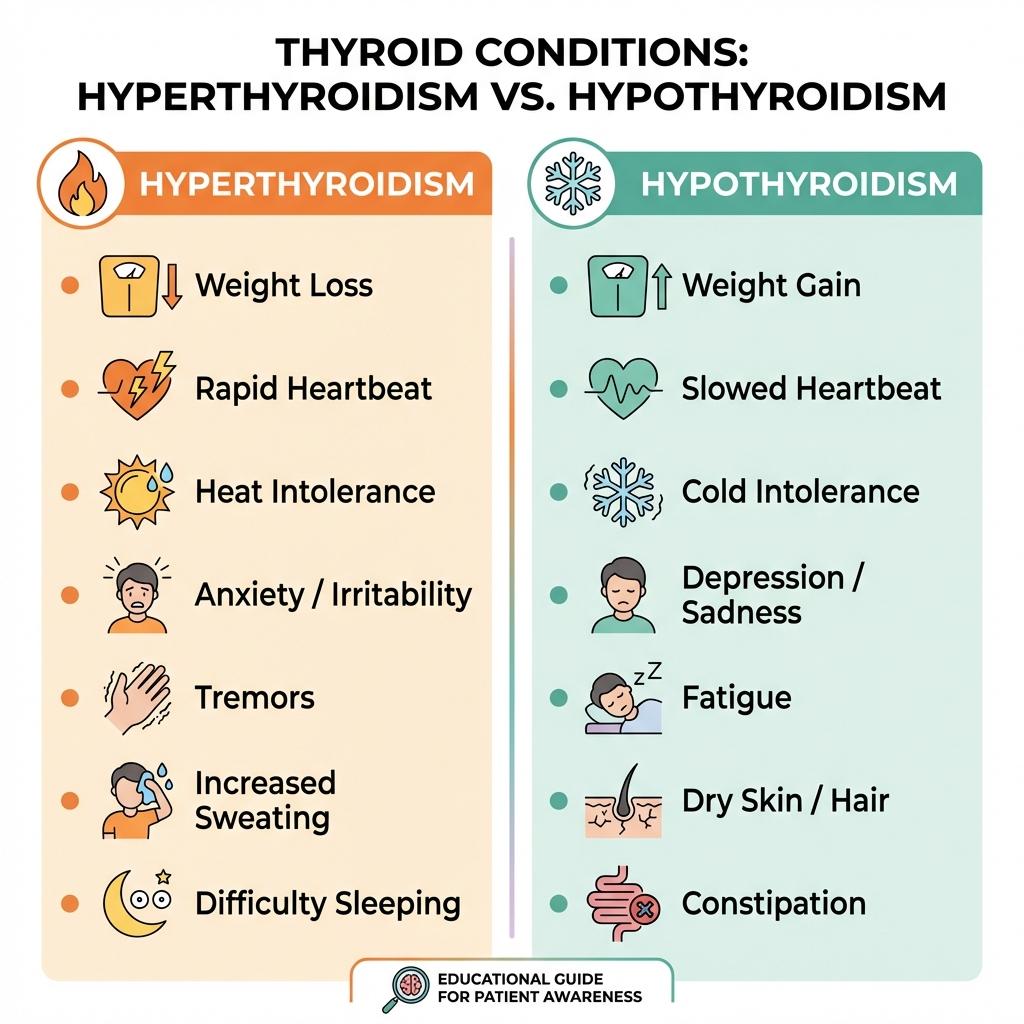
Hyperthyroidism occurs when the thyroid gland produces an excess of thyroid hormones, leading to an acceleration of the body’s metabolic processes. It is akin to your body running in overdrive, often manifesting with noticeable, though sometimes initially dismissed, symptoms. Individuals with hyperthyroidism might experience a constellation of signs, reflecting this heightened metabolic state. These can include unexplained weight loss despite an increased appetite, a racing or irregular heartbeat (known as palpitations), and fine tremors in the hands. The constant internal rush often leads to feelings of anxiety, nervousness, and irritability, making concentration difficult and sleep elusive. You might also notice an increased sensitivity to heat, excessive sweating, and frequent bowel movements. Muscle weakness, particularly in the upper arms and thighs, can make everyday tasks challenging. In some cases, the thyroid gland itself may become visibly enlarged, a condition referred to as a goiter, which can be seen or felt as a swelling in the neck.
Causes and Risk Factors in Singapore
The most common cause of hyperthyroidism is Graves’ disease, an autoimmune disorder where the body’s immune system mistakenly attacks the thyroid gland, causing it to produce too much hormone. Other causes include toxic multinodular goiter, where several nodules or lumps within the thyroid become overactive, and thyroiditis, an inflammation of the thyroid gland that can temporarily release stored thyroid hormones. Occasionally, consuming excessive amounts of iodine, perhaps from certain supplements or dietary habits, can also trigger hyperthyroidism in susceptible individuals. In Singapore, while iodine deficiency is rare due to iodized salt, dietary patterns and supplement choices still warrant attention. Risk factors for developing hyperthyroidism include a family history of thyroid disease, being female, and having other autoimmune conditions such as Type 1 diabetes or pernicious anaemia.
Diagnosis and Treatment Approaches
Diagnosing hyperthyroidism typically involves a series of blood tests to measure the levels of TSH, T3, and T4 hormones. In hyperthyroidism, TSH levels are usually low, while T3 and T4 levels are elevated. Further diagnostic tools may include a radioactive iodine uptake scan, which helps determine the cause of the overactivity by showing how much iodine the thyroid gland absorbs. Once diagnosed, treatment options in Singapore are tailored to the individual and the underlying cause. Anti-thyroid medications, such as carbimazole or propylthiouracil, are commonly prescribed to reduce hormone production. Another effective treatment is radioactive iodine therapy, which involves taking a single dose of radioactive iodine to selectively destroy overactive thyroid cells. In some instances, surgical removal of part or all of the thyroid gland (thyroidectomy) may be recommended, particularly for very large goiters or when other treatments are not suitable. Post-treatment, regular follow-up with an endocrinologist is vital to monitor hormone levels and adjust medication as needed, ensuring long-term health management.
Hypothyroidism: When the Thyroid is Underactive
The Silent Slowdown: Recognizing Subtler Signs
In contrast to hyperthyroidism, hypothyroidism occurs when the thyroid gland produces insufficient thyroid hormones, leading to a general slowing down of the body’s metabolic functions. The symptoms of an underactive thyroid often develop gradually over many months or even years, making them subtle and easy to attribute to aging, stress, or other lifestyle factors. This “silent slowdown” can manifest as persistent fatigue and lethargy, even after adequate rest, and an unexplained weight gain despite no significant changes in diet or exercise. Many individuals experience an increased sensitivity to cold, feeling chilly even in warm environments, a common complaint in air-conditioned Singapore. Other signs include constipation, dry skin, brittle nails, and hair loss. Mentally, there can be a noticeable decline in memory and concentration, often described as “brain fog,” alongside feelings of depression or apathy. Physical symptoms might extend to muscle aches, stiffness, and joint pain. For women, menstrual irregularities, such as heavier or more frequent periods, are also common. Similar to hyperthyroidism, a goiter can also develop in hypothyroidism as the gland tries to produce more hormones.
Primary Causes and Risk Factors
The leading cause of hypothyroidism globally and in Singapore is Hashimoto’s thyroiditis, an autoimmune disease where the immune system attacks and gradually destroys the thyroid gland’s ability to produce hormones. Other common causes include the after-effects of treatments for hyperthyroidism, such as radioactive iodine therapy or thyroid surgery, which can lead to an underactive thyroid if too much of the gland is removed or destroyed. Iodine deficiency, while less prevalent in Singapore due to the widespread availability of iodized salt and a diverse diet, can still contribute to hypothyroidism in certain populations or with specific dietary restrictions. Certain medications, such as lithium, can also affect thyroid function. Risk factors for developing hypothyroidism largely mirror those of hyperthyroidism, including being female, older age, a family history of thyroid disease, and the presence of other autoimmune conditions.
Diagnostic Procedures and Management
Diagnosing hypothyroidism also relies on blood tests. Typically, TSH levels will be elevated, indicating that the pituitary gland is working harder to stimulate a sluggish thyroid, while T4 levels will be low. In some early stages, TSH might be elevated while T4 is still within the normal range, a condition known as subclinical hypothyroidism. Once diagnosed, the primary treatment for hypothyroidism is lifelong daily synthetic thyroid hormone replacement, usually in the form of levothyroxine. This medication effectively replaces the hormones your body is no longer producing sufficiently, restoring normal metabolic function. It is crucial to take levothyroxine consistently, usually on an empty stomach in the morning, and to avoid taking it with certain supplements or medications that can interfere with its absorption. Regular blood tests are essential to monitor TSH and T4 levels, allowing your doctor, whether a general practitioner or an endocrinologist, to adjust the dosage as needed to maintain optimal hormone balance. Adherence to medication and consistent follow-ups are key to managing hypothyroidism effectively and preventing complications.

Differentiating Between the Two: A Diagnostic Challenge
Overlapping Symptoms and Key Distinctions
One of the reasons thyroid disorders are often misdiagnosed or overlooked is the significant overlap in some of their symptoms. For instance, both hyperthyroidism and hypothyroidism can cause fatigue and changes in mood. However, the nature of these symptoms often provides a clue. In hyperthyroidism, fatigue might be accompanied by a feeling of being “wired” or restless, an exhaustion from the body’s constant overdrive. In hypothyroidism, fatigue is typically a profound, pervasive sluggishness. Similarly, while weight changes are common in both, hyperthyroidism often leads to weight loss despite an increased appetite, whereas hypothyroidism frequently causes weight gain. Temperature sensitivity also differs: hyperthyroid individuals often feel hot and sweat excessively, while hypothyroid individuals are typically cold intolerant. Mood disturbances are distinct too; anxiety and irritability are hallmarks of hyperthyroidism, while depression and apathy are more characteristic of hypothyroidism. These subtle differences underscore why a thorough medical evaluation and diagnostic testing are indispensable, rather than relying solely on self-assessment of symptoms. A definitive diagnosis requires comprehensive blood tests that measure TSH, free T3, and free T4 levels to accurately assess thyroid function.
The Role of Timely Consultation and Specialist Care
Given the nuanced presentation of thyroid disorders, timely consultation with a healthcare professional in Singapore is paramount. If you suspect you may have a thyroid condition based on persistent or unexplained symptoms, your first step should be to visit your general practitioner (GP) or a polyclinic. These healthcare providers can conduct initial assessments and blood tests. If the results indicate a thyroid imbalance, they can then refer you to an endocrinologist, a specialist in hormone disorders, for further evaluation and management. Undiagnosed or untreated thyroid conditions can lead to a range of complications. Hyperthyroidism, if left unmanaged, can result in severe heart problems, brittle bones (osteoporosis), and a dangerous condition called thyroid storm. Hypothyroidism, on the other hand, can lead to heart disease, nerve damage, infertility, and in severe cases, myxedema coma. Early and accurate diagnosis, followed by appropriate medical management, significantly improves outcomes and ensures a better quality of life for those affected.
Navigating Thyroid Health: Actionable Insights for Singaporeans
Lifestyle Adjustments and Dietary Considerations
While medication is often the cornerstone of thyroid disorder management, adopting certain lifestyle adjustments and dietary considerations can significantly support overall thyroid health. For all Singaporeans, maintaining a balanced diet rich in whole foods, managing stress effectively through practices like mindfulness or exercise, and ensuring regular physical activity are fundamental for well-being. When it comes to specific nutrients for thyroid health, iodine is critical for hormone production. However, it is a delicate balance; too little can cause hypothyroidism, while too much can exacerbate hyperthyroidism. In Singapore, dietary iodine intake is generally sufficient due to iodized salt and seafood consumption, but individuals with specific dietary restrictions or those consuming large amounts of iodine-rich supplements should consult their doctor. Selenium and zinc are also important trace minerals for thyroid function. Foods like Brazil nuts (selenium) and lean meats, nuts, and legumes (zinc) can contribute to a healthy thyroid. However, always discuss any significant dietary changes or supplement use with your healthcare provider, especially if you are already on thyroid medication, to avoid interactions or imbalances.
When to Seek Medical Attention
Recognizing when to seek professional medical attention is key to proactive health management. If you experience any persistent, unexplained symptoms such as significant changes in weight, energy levels, mood, or heart rate, it is advisable to consult a doctor. This is particularly important if you have a family history of thyroid disease or other autoimmune conditions, as these can increase your risk. Regular health screenings, which often include basic blood tests, can sometimes detect thyroid imbalances even before overt symptoms appear. Remember that the information provided here is intended for general awareness and educational purposes only. It is not a substitute for professional medical advice, diagnosis, or treatment. Always consult with a qualified healthcare professional in Singapore for any health concerns or before making any decisions related to your health or treatment. Your doctor can provide personalized advice based on your individual health profile and circumstances.
The journey to understanding and managing thyroid conditions begins with awareness. Both hyperthyroidism and hypothyroidism, while presenting with distinct and often subtle symptoms, are treatable conditions. Early detection through vigilant self-awareness and timely medical consultation can prevent serious complications and significantly improve your quality of life. By staying informed and proactive about your health, you can ensure that your thyroid, the master regulator, continues to function harmoniously, keeping your body’s symphony in perfect tune.

Jeremy Lee is a seasoned digital marketing director and strategist with over two decades of experience in the industry. As the founder of Sotavento Medios, I manage a diverse portfolio of over 50 businesses, helping brands grow through advanced search strategies and digital innovation. My work focuses on bridging the gap between traditional search engine optimisation and the evolving world of AI-driven answer engines.