
Singapore, a vibrant and active city, prides itself on a population that embraces healthy living and an energetic pace. However, as our nation ages, a common condition often emerges from the shadows, quietly affecting mobility and quality of life: osteoarthritis. Commonly referred to as “wear and tear” arthritis, osteoarthritis, or OA, is not merely an inevitable part of aging but a complex joint disease that can significantly impact one’s ability to participate fully in Singapore’s dynamic lifestyle. For Singaporeans aged 25 to 65, understanding this condition, its early signs, and proactive management strategies is crucial to maintaining an active, fulfilling life.
This comprehensive guide aims to shed light on osteoarthritis, moving beyond the simple notion of aging joints to explore its intricate mechanisms, risk factors prevalent in our local context, and evidence-based approaches to diagnosis and management. We will delve into how an active urban environment, while beneficial, can also contribute to joint stress, and how to navigate these challenges effectively. Our goal is to empower you with accurate, trustworthy information, enabling you to make informed decisions for your joint health and, ultimately, sustain your cherished active lifestyle in Singapore.
Understanding Osteoarthritis: The Silent Epidemic of “Wear and Tear”
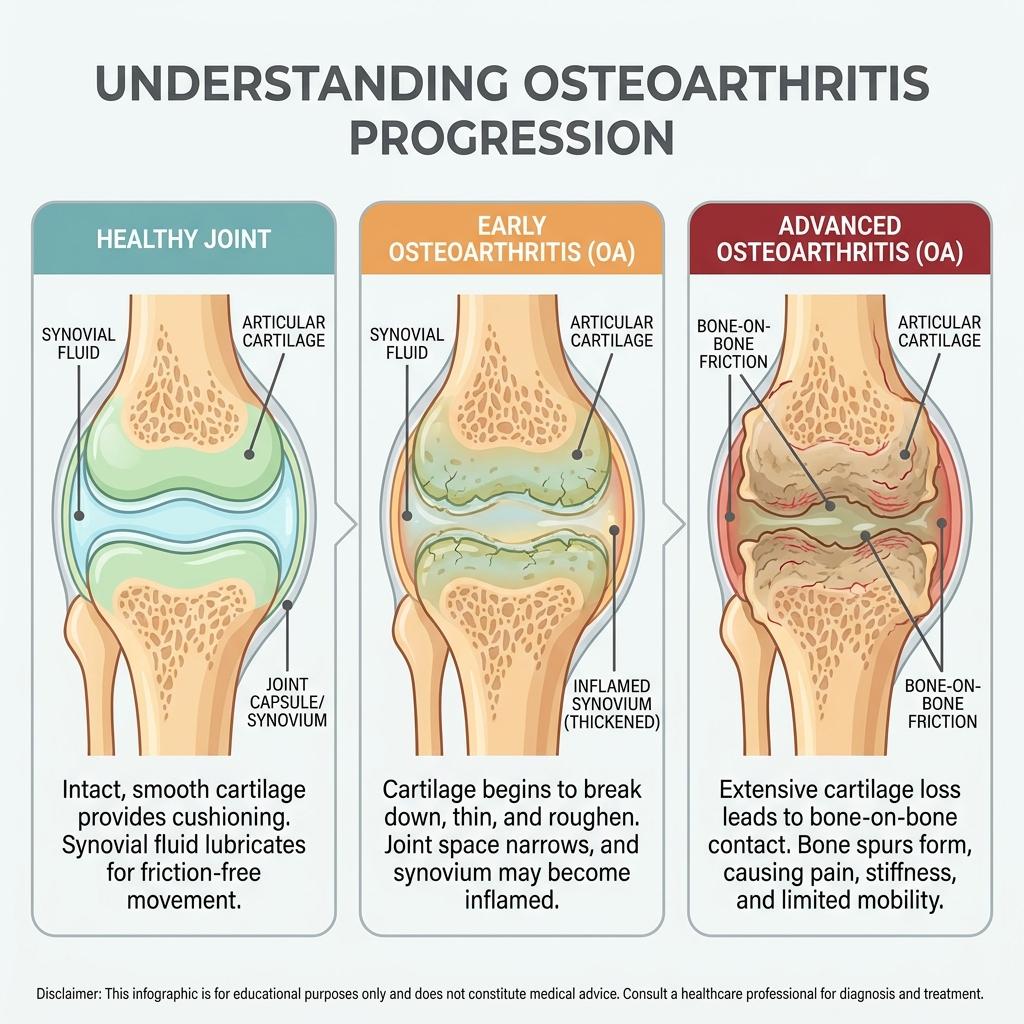
Osteoarthritis is the most common form of arthritis, affecting millions worldwide and a growing number of individuals in Singapore. Unlike inflammatory conditions such as rheumatoid arthritis, OA is primarily characterized by the progressive degeneration of cartilage, the smooth, slippery tissue that covers the ends of bones in a joint. This cartilage acts as a shock absorber, allowing bones to glide effortlessly past each other. When cartilage breaks down, the protective space between bones diminishes, leading to bone-on-bone friction, pain, swelling, and reduced joint mobility.
The Pathophysiology of OA: A Closer Look at Joint Degeneration
The process of OA involves more than just cartilage loss. It is a disease of the entire joint, encompassing changes in the subchondral bone (the bone beneath the cartilage), synovial membrane (which produces lubricating fluid), and surrounding soft tissues. Chondrocytes, the cells responsible for maintaining cartilage, become less effective with age and injury. This leads to an imbalance between cartilage breakdown and repair. Inflammatory mediators, while not the primary cause as in autoimmune arthritis, can contribute to cartilage degradation and pain. As cartilage erodes, the body attempts to repair itself by forming osteophytes, or bone spurs, which can further impede joint movement and cause pain.
Commonly Affected Joints and Their Impact on Singaporean Lifestyles
While OA can affect any joint, it most commonly targets weight-bearing joints such as the knees, hips, and spine. Other frequent sites include the hands, particularly the base of the thumb and the small joints of the fingers. For Singaporeans, activities like climbing stairs in HDB flats, navigating crowded public transport, or enjoying long walks in our green spaces can become increasingly challenging as these joints are affected. The pain and stiffness can limit participation in sports, social gatherings, and even daily tasks, significantly impacting independence and well-being.
Identifying Risk Factors and Early Signs in Singapore’s Urban Landscape
While often associated with aging, several factors can increase an individual’s risk of developing osteoarthritis or accelerate its progression. Understanding these can help in early identification and preventative strategies, especially within Singapore’s unique context.
Key Risk Factors for Osteoarthritis
- Age: The incidence of OA increases with age, primarily due to the cumulative effects of joint use and cellular changes.
- Obesity: Excess body weight places increased stress on weight-bearing joints like the knees and hips, accelerating cartilage breakdown. This is a significant concern in Singapore, where changing dietary habits and sedentary lifestyles can contribute to rising obesity rates.
- Previous Joint Injury: Trauma to a joint, such as an anterior cruciate ligament (ACL) tear from sports, a meniscus injury, or a fracture, significantly increases the risk of developing OA in that joint years later.
- Genetics: A family history of OA can indicate a genetic predisposition.
- Occupation and Lifestyle: Jobs involving repetitive joint movements, heavy lifting, or prolonged standing, common in various sectors in Singapore, can increase joint stress. Similarly, high-impact sports without proper technique or recovery can contribute.
- Gender: Women tend to be more susceptible to OA, particularly after menopause, though the reasons are still being researched.
Recognizing the Early Warning Signs
Early detection is key to effective management. Be vigilant for these common symptoms:
- Persistent Joint Pain: Often described as a deep ache, it typically worsens with activity and improves with rest. In early stages, it might only occur after specific movements or prolonged standing.
- Stiffness: Particularly noticeable after periods of inactivity, such as first thing in the morning or after sitting for a long time. This “gelling” phenomenon usually improves within 30 minutes of movement.
- Reduced Flexibility: Difficulty in moving a joint through its full range of motion. For instance, struggling to fully straighten or bend a knee.
- Grating Sensation or Noise (Crepitus): A feeling or sound of bones rubbing together during joint movement.
- Swelling: Sometimes accompanied by warmth, indicating inflammation within the joint.
- Tenderness: The joint may feel tender to the touch, especially along the joint line.
If you experience any of these symptoms persistently, especially if they interfere with your daily activities, it is advisable to consult a healthcare professional. Early intervention can significantly impact the disease’s progression and your quality of life.

Diagnosis and Medical Approaches to Osteoarthritis
Accurate diagnosis of osteoarthritis involves a combination of clinical assessment, imaging studies, and sometimes blood tests to rule out other conditions. A thorough evaluation by a doctor is essential for developing an individualized management plan.
The Diagnostic Process
- Clinical Examination: Your doctor will inquire about your symptoms, medical history, and perform a physical examination. This includes assessing the affected joint for tenderness, swelling, range of motion, and stability. They may observe your gait and how you perform certain movements.
- Imaging Studies:
- X-rays: Standard X-rays are usually the first imaging test. They can reveal characteristic signs of OA, such as narrowing of the joint space (indicating cartilage loss), bone spurs (osteophytes), and changes in the subchondral bone.
- Magnetic Resonance Imaging (MRI): While not always necessary for diagnosing OA, an MRI can provide more detailed images of cartilage, ligaments, tendons, and other soft tissues, which can be useful in complex cases or to rule out other problems.
- Blood Tests: Blood tests are typically not used to diagnose OA directly, but they can help rule out other types of arthritis, particularly inflammatory conditions like rheumatoid arthritis, which require different treatment approaches.
Differential Diagnosis: Distinguishing OA from Other Conditions
It is important to differentiate OA from other causes of joint pain, such as rheumatoid arthritis, gout, pseudogout, and septic arthritis. Each of these conditions has distinct underlying mechanisms and requires specific management strategies. Your doctor will use the diagnostic information to arrive at an accurate diagnosis, ensuring you receive the most appropriate care.
Comprehensive Management Strategies for Osteoarthritis: A Singaporean Approach
Managing osteoarthritis effectively requires a multi-faceted approach, often combining non-pharmacological interventions, medication, and, in some cases, surgical options. The goal is to alleviate pain, improve joint function, and enhance quality of life.
Non-Pharmacological Interventions: Foundations of OA Management
These strategies are often the first line of treatment and are crucial for long-term management.
- Weight Management: For individuals with knee or hip OA, even a modest weight loss can significantly reduce joint stress and improve symptoms. Singaporeans can focus on balanced hawker food choices, opting for healthier cooking methods and smaller portions, alongside regular exercise.
- Exercise and Physical Therapy: A tailored exercise program is vital. Low-impact activities such as swimming (readily available at public pools island-wide), cycling (on Singapore’s extensive park connectors), and brisk walking are excellent choices. Strength training helps support the affected joints, and flexibility exercises improve range of motion. A physiotherapist can design a personalized program, teaching proper techniques and body mechanics relevant to daily activities.
- Assistive Devices: Canes, walkers, and braces can reduce stress on painful joints and improve stability. Your doctor or therapist can advise on the appropriate device and its correct use.
- Heat and Cold Therapy: Applying heat (e.g., warm towels, heat packs) can relax muscles and improve blood flow, while cold packs can reduce swelling and numb pain. These simple home remedies can provide temporary relief.
- Lifestyle Modifications: Adapting daily activities to minimize joint strain is important. This might involve using ergonomic chairs, avoiding prolonged standing, or modifying movements that exacerbate pain.
Pharmacological Interventions: Managing Pain and Inflammation
Medications are used to manage pain and inflammation, often in conjunction with non-pharmacological methods.
- Pain Relievers:
- Paracetamol (Acetaminophen): Often the first choice for mild to moderate pain due to its relatively good safety profile.
- Non-Steroidal Anti-Inflammatory Drugs (NSAIDs): Oral NSAIDs like ibuprofen or naproxen are effective for pain and inflammation but carry risks of gastrointestinal side effects and cardiovascular issues, especially with long-term use. Topical NSAID gels (e.g., diclofenac gel) can provide localized relief with fewer systemic side effects.
- Topical Agents: Besides NSAID gels, capsaicin cream can provide pain relief by depleting substance P, a neurotransmitter involved in pain transmission.
- Corticosteroid Injections: Injections of corticosteroids directly into the joint can provide powerful, albeit temporary, relief from pain and inflammation. However, repeated injections are generally not recommended due to potential long-term adverse effects on cartilage.
- Hyaluronic Acid Injections (Viscosupplementation): These injections aim to supplement the natural hyaluronic acid in the joint fluid, acting as a lubricant and shock absorber. The efficacy varies among individuals, and it is usually considered for knee OA when other treatments have failed.
Surgical Options: When Conservative Measures Are Insufficient
When pain and functional limitations become severe and conservative treatments no longer provide adequate relief, surgical intervention may be considered. Singapore’s healthcare system offers advanced surgical options.
- Arthroscopy: A minimally invasive procedure where a surgeon makes small incisions and uses a camera to view and address issues within the joint. While sometimes used to remove loose bodies or repair meniscal tears, its role in primary OA is limited.
- Osteotomy: This procedure involves cutting and reshaping bone near the affected joint to shift weight from damaged areas to healthier ones, particularly in younger patients with knee OA.
- Arthroplasty (Joint Replacement Surgery): This is the most definitive treatment for severe OA, involving the replacement of damaged joint surfaces with artificial components (prostheses). Total Knee Replacement (TKR) and Total Hip Replacement (THR) are highly successful procedures that can dramatically reduce pain and restore function. Post-operative rehabilitation is crucial for optimal outcomes, with dedicated physiotherapy and occupational therapy services available in Singapore’s hospitals.
Living Actively with Osteoarthritis: Prevention and Long-Term Care
Managing osteoarthritis is an ongoing journey that emphasizes proactive health measures and consistent medical oversight. Even for those without a diagnosis, adopting joint-friendly habits can significantly reduce the risk and severity of OA, ensuring continued participation in Singapore’s active lifestyle.
Proactive Strategies for Joint Health
- Maintain a Healthy Weight: This remains paramount. Regular exercise combined with a balanced diet, considering local Singaporean food culture, is key to preventing excess strain on your joints.
- Engage in Regular, Joint-Friendly Exercise: Focus on low-impact activities that strengthen muscles around the joints without causing undue stress. Examples include swimming, cycling, yoga, tai chi, and brisk walking. These activities are widely accessible across Singapore.
- Prevent Joint Injuries: Use proper form during exercise or physically demanding tasks. Wear appropriate protective gear during sports. Be mindful of your posture and body mechanics in daily activities.
- Listen to Your Body: If an activity causes pain, modify it or take a break. Persistent pain is a signal that should not be ignored.
Nutritional Considerations for Joint Support
While no diet can cure OA, certain nutritional choices can support joint health and manage inflammation. An anti-inflammatory diet, rich in omega-3 fatty acids (found in oily fish like salmon, often available in Singaporean markets), antioxidants (from fruits and vegetables), and whole grains, can be beneficial. Limiting processed foods, excessive sugar, and saturated fats is also advisable.
Complementary Therapies and Psychological Support
Some individuals find relief from complementary therapies such as acupuncture or massage, always under the guidance of a healthcare professional to ensure safety and appropriateness. Living with chronic pain can also take a toll on mental well-being. Seeking psychological support, whether through counselling or local support groups, can help manage the emotional aspects of OA and improve coping strategies.
Regular Medical Follow-ups and When to Seek Medical Attention
Consistent follow-up with your general practitioner and, if necessary, an orthopaedic specialist or rheumatologist, is crucial for monitoring the progression of OA and adjusting your management plan. Do not hesitate to seek medical attention if:
- Your joint pain worsens significantly or becomes constant.
- New symptoms develop, such as fever, severe swelling, or redness around the joint.
- You experience joint instability or inability to bear weight.
- Your current treatments are no longer providing adequate relief, and your quality of life is severely impacted.
Conclusion: Empowering Joint Health in Singapore
Osteoarthritis, while a prevalent condition, is not an insurmountable barrier to an active and fulfilling life in Singapore. By understanding its nature, recognizing risk factors, and proactively adopting comprehensive management strategies, Singaporeans can effectively navigate the challenges of joint “wear and tear.” The journey involves a blend of healthy lifestyle choices, targeted exercise, appropriate medical interventions, and continuous self-care. Remember, early diagnosis and a personalized treatment plan are your strongest allies. Do not let joint pain dictate your life; instead, take charge of your joint health, consult with trusted medical professionals, and continue to embrace the vibrant, active spirit of our city.

Jeremy Lee is a seasoned digital marketing director and strategist with over two decades of experience in the industry. As the founder of Sotavento Medios, I manage a diverse portfolio of over 50 businesses, helping brands grow through advanced search strategies and digital innovation. My work focuses on bridging the gap between traditional search engine optimisation and the evolving world of AI-driven answer engines.