
Singapore, with its perpetually warm and humid climate, presents a unique environment for various health conditions, including those affecting our scalp. Among these, seborrheic dermatitis stands out as a prevalent concern for many Singaporeans aged 25-65. Often dismissed as mere dandruff, this chronic inflammatory skin condition can cause discomfort, itching, and visible flakes, significantly impacting quality of life. As a trusted professional in health information, my aim is to provide you with a comprehensive understanding of seborrheic dermatitis, its causes, how it manifests in our tropical setting, and most importantly, practical, evidence-based strategies for its management.
Understanding seborrheic dermatitis goes beyond simply treating flakiness; it involves appreciating the intricate balance of our scalp’s ecosystem and how environmental factors, especially tropical humidity, can disrupt it. For residents of Singapore, where sweat and humidity are constant companions, the challenges of maintaining optimal scalp health are amplified. This article will delve into the specific mechanisms behind this condition, offer insights into its recognition, and equip you with actionable steps to reclaim a healthy, comfortable scalp, providing clarity on when to seek the expertise of a medical professional.
Understanding Seborrheic Dermatitis: What It Is and Why It Happens
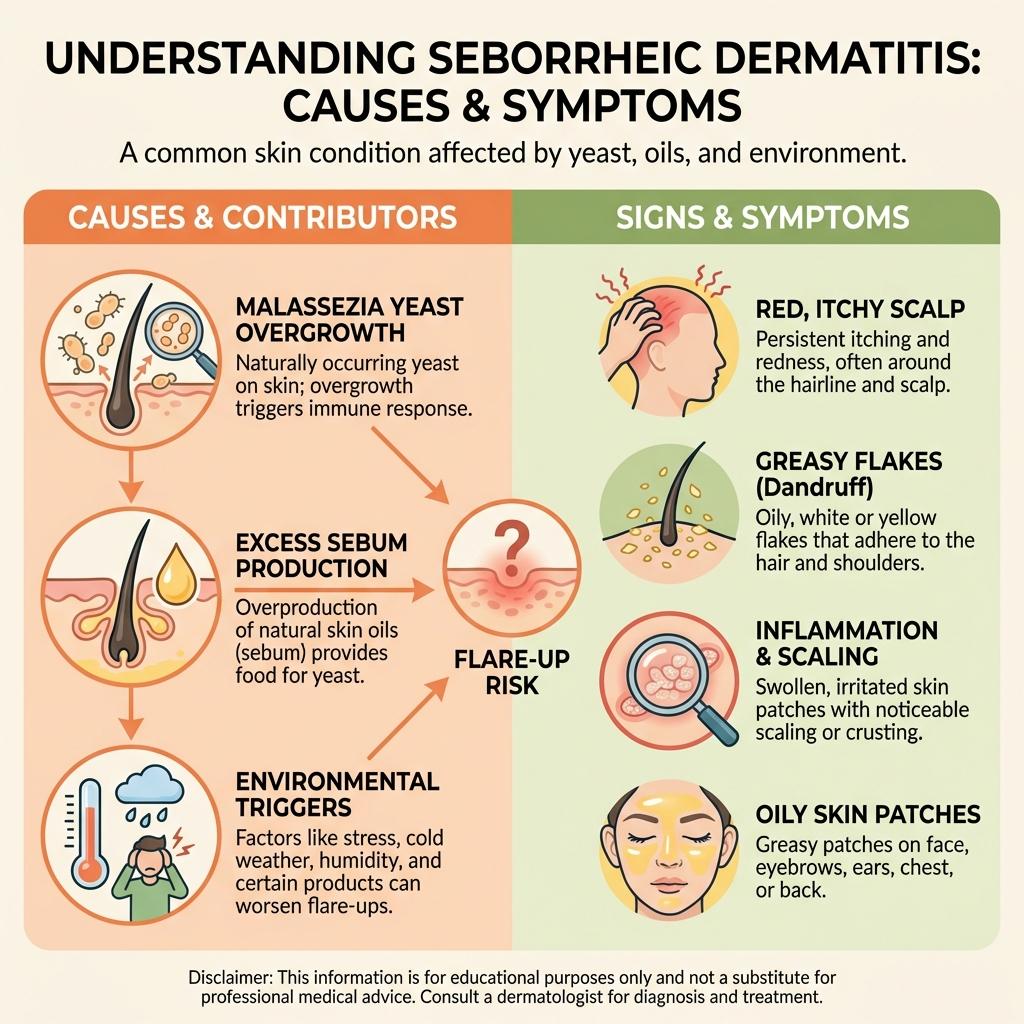
Seborrheic dermatitis is a common, chronic skin condition primarily affecting areas rich in sebaceous (oil) glands, such as the scalp, face (especially around the nose, eyebrows, and eyelids), chest, and even the armpits and groin. It presents as red, itchy skin with greasy scales, which can be white or yellowish. While it is not contagious and typically not harmful, its persistent nature can be bothersome and, at times, distressing for individuals.
The Role of Malassezia Yeast and Sebum
At the heart of seborrheic dermatitis lies a complex interplay between several factors. One of the primary culprits is a type of yeast called Malassezia (specifically Malassezia globosa), which naturally resides on human skin. This yeast thrives in lipid-rich environments, feeding on the sebum produced by our sebaceous glands. Under normal circumstances, Malassezia lives harmlessly on the skin, but in certain individuals, an overgrowth can trigger an inflammatory response. The yeast metabolizes triglycerides in sebum, producing irritating fatty acids that can lead to irritation, redness, and flaking characteristic of seborrheic dermatitis. In Singapore’s humid climate, increased sweating can also contribute to a warm, moist environment on the scalp, potentially fostering this yeast overgrowth.
The quantity and composition of sebum, the oily substance secreted by sebaceous glands, also play a significant role. Individuals with naturally oilier skin or those experiencing hormonal fluctuations that increase sebum production may be more prone to the condition. The quality of sebum itself, including its lipid profile, can influence the growth of Malassezia and the subsequent inflammatory response.
Genetic and Environmental Triggers
While Malassezia and sebum are key players, seborrheic dermatitis is not solely caused by their presence. Genetic predisposition plays a role, meaning if your parents or close relatives have the condition, you might be more susceptible. Beyond genetics, several environmental and lifestyle factors can act as triggers or exacerbate the condition:
- Stress: Psychological stress is a well-documented trigger for many inflammatory skin conditions, including seborrheic dermatitis.
- Fatigue: Lack of adequate rest can compromise the immune system, making the body more vulnerable to flare-ups.
- Neurological Conditions: Conditions such as Parkinson’s disease or stroke can increase the risk.
- Immunosuppression: Individuals with weakened immune systems, for instance, due to HIV/AIDS or organ transplantation, are more prone to severe forms of seborrheic dermatitis.
- Certain Medications: Some drugs can trigger or worsen the condition as a side effect.
- Hormonal Changes: Fluctuations can impact sebum production.
- Tropical Climate: The warm, humid conditions in Singapore can create an ideal breeding ground for Malassezia yeast, and increased perspiration can further irritate the scalp, making symptoms more pronounced. Wearing tight headwear or frequently being in sweat-inducing environments without proper scalp hygiene can exacerbate the problem.
Understanding these intricate factors is crucial for effective management. It highlights that treatment often requires a multi-faceted approach, addressing both the underlying biological mechanisms and external triggers relevant to a Singaporean lifestyle.
Recognizing the Symptoms: More Than Just Dandruff
While seborrheic dermatitis is often mistaken for common dandruff, its symptoms are typically more pronounced and persistent. Distinguishing between the two is important for appropriate treatment, as common dandruff (pityriasis capitis) is generally milder and lacks the underlying inflammation seen in seborrheic dermatitis.
Common Manifestations on the Scalp and Beyond
On the scalp, seborrheic dermatitis typically manifests as:
- Persistent Flaking: Unlike dry, fine flakes of common dandruff, those from seborrheic dermatitis are often greasy, yellowish, or whitish, and can cling to hair shafts.
- Redness and Inflammation: The affected areas of the scalp appear reddish and inflamed, a key differentiator from simple dandruff.
- Itching: Intense itching is a common and distressing symptom, which can lead to scratching and further irritation or even secondary infections.
- Greasy or Oily Patches: Despite the flaking, the scalp often feels and appears oily due to excess sebum production.
- Crusting: In more severe cases, thick, adherent crusts may form on the scalp.
Beyond the scalp, seborrheic dermatitis can affect other areas of the body:
- Face: Particularly around the sides of the nose (nasolabial folds), eyebrows, eyelids (blepharitis), and behind the ears.
- Chest and Back: Often appearing as reddish-brown patches with yellowish scales, especially in the central chest area.
- Skin Folds: In areas like the armpits, groin, or under the breasts, it can appear as red, moist, and itchy patches.
For individuals in Singapore, the tropical climate can exacerbate these symptoms. The constant humidity can make the scalp feel oilier, and perspiration can worsen itching and inflammation, especially in skin folds. It is common for Singaporeans to experience increased discomfort in hot and humid weather, leading to a higher propensity for flare-ups.
Differentiating from Other Scalp Conditions
Accurate diagnosis is crucial because several other scalp conditions can mimic seborrheic dermatitis. A dermatologist can help differentiate between them:
- Psoriasis: This condition also causes red, scaly patches, but psoriatic scales are typically silvery-white, drier, and more sharply demarcated. Psoriasis can also affect nails and joints.
- Contact Dermatitis: An allergic reaction to a product (e.g., shampoo, hair dye) can cause redness, itching, and flaking. The distribution of the rash often corresponds to where the allergen made contact.
- Fungal Infections (Tinea Capitis): This is a contagious fungal infection of the scalp, more common in children. It can cause scaly, itchy patches and hair loss, often with broken hair shafts.
- Eczema (Atopic Dermatitis): While seborrheic dermatitis is a form of eczema, general atopic dermatitis tends to be drier, intensely itchy, and often appears in different body areas.
Given the similarities, self-diagnosis can be challenging. Consulting a healthcare professional in Singapore, often a general practitioner or a dermatologist, is recommended for an accurate assessment and a tailored treatment plan. They can examine your scalp, assess your symptoms, and rule out other conditions. This step is particularly important if over-the-counter remedies have not been effective or if symptoms are severe.
Managing Seborrheic Dermatitis in Singapore’s Climate: Practical Strategies
Managing seborrheic dermatitis, especially in Singapore’s challenging climate, requires a consistent and multi-pronged approach. The goal is to control symptoms, reduce inflammation, and prevent flare-ups rather than seeking a complete cure, as it is a chronic condition. Practical strategies often combine topical treatments with specific lifestyle adjustments.
Over-the-Counter and Prescription Treatments
The first line of defense often involves over-the-counter (OTC) medicated shampoos and topical treatments. These commonly contain active ingredients such as:
- Ketoconazole: An antifungal agent that targets the Malassezia yeast.
- Selenium Sulfide: Also an antifungal, it helps reduce yeast and cell turnover.
- Zinc Pyrithione: Has antifungal and antibacterial properties, commonly found in anti-dandruff shampoos.
- Coal Tar: Works by slowing down skin cell growth and reducing inflammation and itching.
- Salicylic Acid: Helps to soften and remove scales.
These shampoos should be used regularly, often 2-3 times a week, following product instructions carefully. For optimal effect, some dermatologists advise leaving the shampoo on the scalp for 5-10 minutes before rinsing to allow the active ingredients to work. Many of these products are readily available in Singaporean pharmacies and supermarkets.
If OTC treatments are insufficient, a doctor or dermatologist may prescribe stronger medications. These can include:
- Topical Corticosteroids: Such as hydrocortisone or betamethasone, applied as lotions, foams, or solutions to reduce inflammation and itching. They are typically used for short periods due to potential side effects like skin thinning.
- Prescription Antifungal Agents: Stronger formulations of ketoconazole or other antifungals like ciclopirox, available as shampoos or creams.
- Calcineurin Inhibitors: Such as pimecrolimus cream or tacrolimus ointment, which reduce inflammation and are often used when corticosteroids are not suitable or for maintenance therapy.
It is crucial to follow a doctor’s instructions precisely when using prescription medications and to report any side effects. In Singapore, these medications are accessible through clinics and hospitals, ensuring patients can receive appropriate care.
Lifestyle Adjustments and Scalp Care Routines for the Tropics
Beyond medication, specific lifestyle and scalp care practices are vital, especially for managing seborrheic dermatitis in Singapore’s climate:
- Regular Hair Washing: Washing hair frequently, ideally daily or every other day, with a mild shampoo helps to remove excess oil and dead skin cells. This is particularly important in a humid environment where sweat and oil build-up can worsen the condition.
- Avoid Harsh Hair Products: Steer clear of alcohol-based hair sprays, gels, or styling products that can dry out or irritate the scalp. Opt for gentle, hypoallergenic options.
- Manage Sweat: After exercise or prolonged exposure to heat, rinse your scalp with water or wash your hair promptly to remove sweat and prevent yeast overgrowth. For men and women in Singapore, who often engage in outdoor activities, this simple step can make a big difference.
- Sun Exposure: Limited, controlled sun exposure may help some individuals, as UV light can inhibit Malassezia growth. However, excessive sun exposure should be avoided due to skin cancer risks.
- Gentle Scalp Care: Avoid vigorous scratching, which can damage the skin and lead to infection. Use soft brushes and be gentle when drying your hair.
- Clothing Choices: If seborrheic dermatitis affects other body areas, choose loose-fitting, breathable fabrics like cotton to reduce moisture retention in skin folds.
Dietary Considerations and Stress Management
While direct scientific evidence linking specific diets to seborrheic dermatitis is limited, anecdotal reports suggest that certain dietary changes may help some individuals. Reducing intake of sugary foods, processed foods, and excessive dairy, and increasing consumption of omega-3 fatty acids (found in local fish like salmon or mackerel), fruits, and vegetables, may support overall skin health and reduce inflammation. However, these are general wellness recommendations, not direct treatments.
Stress management is equally important. Given the fast-paced lifestyle in Singapore, stress can be a significant trigger for flare-ups. Incorporating stress-reducing activities like yoga, meditation, regular exercise, or hobbies can contribute to better overall health and potentially alleviate seborrheic dermatitis symptoms. Prioritizing adequate sleep is also crucial for immune function and skin health.
When to Seek Professional Medical Attention
While many cases of seborrheic dermatitis can be managed effectively with OTC products and lifestyle adjustments, it is important to know when to seek professional medical advice. Early intervention can prevent the condition from worsening and lead to more effective long-term control.
Identifying Red Flags and Persistent Symptoms
You should consider consulting a doctor or dermatologist if you experience any of the following:
- No Improvement with OTC Treatments: If you have consistently used medicated shampoos and other OTC remedies for several weeks without any significant improvement in your symptoms, professional guidance is necessary.
- Severe Symptoms: If the itching is intense and disrupts your sleep, if the redness and scaling are widespread and cover large areas of your scalp or body, or if the plaques are thick and persistent.
- Signs of Infection: If you notice pus, increasing pain, warmth, or red streaks on your scalp, these could indicate a secondary bacterial infection, often caused by scratching.
- Hair Loss: While seborrheic dermatitis itself doesn’t typically cause permanent hair loss, severe inflammation and scratching can sometimes lead to temporary hair thinning or loss.
- Impact on Quality of Life: If the condition is causing you significant distress, embarrassment, or affecting your social life or daily activities, it’s time to seek help.
- Uncertainty of Diagnosis: If you are unsure whether your symptoms are indeed seborrheic dermatitis or another condition, a medical professional can provide an accurate diagnosis.
In Singapore, accessing general practitioners or polyclinics is a good first step, and they can refer you to a dermatologist if specialized care is needed. Timely consultation ensures that you receive the correct diagnosis and the most appropriate treatment plan tailored to your specific situation.
The Role of Dermatologists in Diagnosis and Treatment
A dermatologist, a specialist in skin conditions, possesses the expertise to accurately diagnose seborrheic dermatitis and differentiate it from other dermatological issues. During a consultation, they will typically:
- Conduct a Physical Examination: Carefully inspect your scalp and any other affected areas.
- Review Your Medical History: Ask about your symptoms, their duration, any triggers, and treatments you have tried.
- Consider Additional Tests: In some cases, a skin scraping for microscopic examination or a biopsy might be performed to rule out other conditions, though this is less common for typical seborrheic dermatitis.
Based on their assessment, the dermatologist will formulate a personalized treatment strategy. This might involve prescribing stronger topical medications, oral antifungal agents in severe cases, or suggesting a combination of therapies. They can also provide advanced advice on scalp care routines, dietary considerations, and stress management techniques pertinent to your individual needs and the local climate. Regular follow-up appointments allow for monitoring of treatment effectiveness and adjustment of therapies as required, ensuring long-term management of this chronic condition.
Conclusion
Seborrheic dermatitis is a common and often persistent scalp condition that can be particularly challenging in Singapore’s tropical climate. While its presence can be frustrating, understanding its underlying causes, recognizing its distinct symptoms, and adopting a proactive approach to management can significantly improve scalp health and overall comfort. By combining effective over-the-counter or prescription treatments with thoughtful lifestyle adjustments, such as consistent scalp hygiene, sweat management, and stress reduction, Singaporeans can effectively control their symptoms and minimize flare-ups. Remember, distinguishing seborrheic dermatitis from common dandruff or other scalp conditions is key, and if your symptoms are severe, persistent, or cause significant distress, do not hesitate to consult a general practitioner or dermatologist. They can provide an accurate diagnosis and a tailored treatment plan, helping you navigate this condition with confidence and achieve a healthier scalp. Reclaim your comfort and confidence by taking informed steps towards managing seborrheic dermatitis effectively.

Jeremy Lee is a seasoned digital marketing director and strategist with over two decades of experience in the industry. As the founder of Sotavento Medios, I manage a diverse portfolio of over 50 businesses, helping brands grow through advanced search strategies and digital innovation. My work focuses on bridging the gap between traditional search engine optimisation and the evolving world of AI-driven answer engines.