
The abdominal wall, a complex arrangement of muscles, fascia, and connective tissues, serves as a protective barrier for vital organs, aids in respiration, and is crucial for core strength and mobility. When this intricate structure is compromised due to major trauma, extensive surgery, or chronic conditions, the consequences can be significant, impacting a patient’s quality of life, physical function, and even posing risks of further complications. For many in Singapore, understanding the profound implications of such damage and the advanced solutions available is the first step towards recovery and a return to normal life. This article aims to provide a comprehensive, evidence-based overview of abdominal wall reconstruction, detailing its importance, the advanced techniques employed, and the journey of recovery for patients.
Understanding Abdominal Wall Defects: Causes and Impact on Daily Life
Abdominal wall defects encompass a range of conditions where the structural integrity of the abdomen is compromised, leading to a gap or weakness. These defects can vary widely in size and complexity, presenting unique challenges for each individual.
Common Causes of Abdominal Wall Defects
- Major Trauma: Severe accidents, such as high-impact vehicular collisions or industrial injuries, can lead to significant tears or loss of abdominal wall tissue.
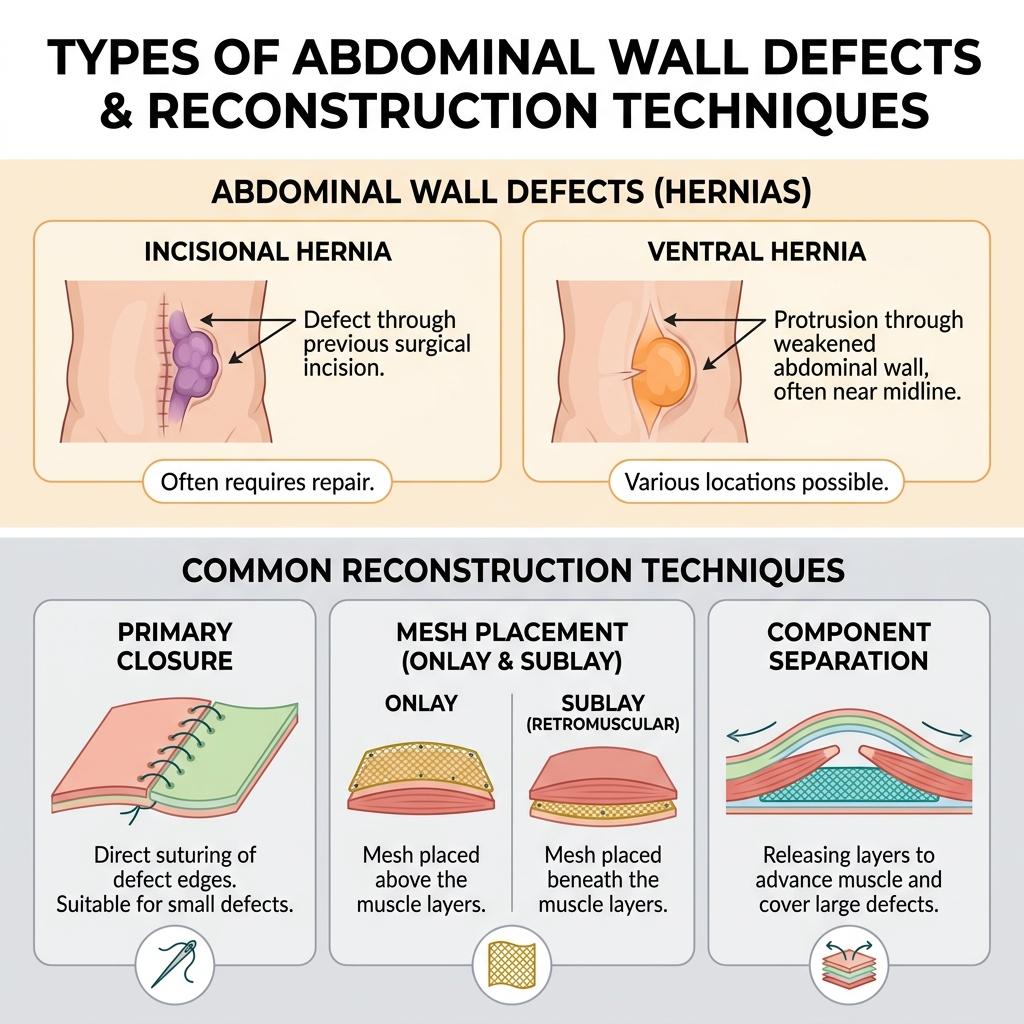
- Extensive Surgery: Operations involving large incisions, especially those for cancer removal, organ transplantation, or repeated abdominal surgeries, can weaken the abdominal wall. Incisional hernias, where abdominal contents protrude through a surgical scar, are a common post-operative complication.
- Congenital Conditions: Though less common in the adult context of reconstruction, some individuals are born with weaknesses in their abdominal wall.
- Infections: Severe abdominal infections, particularly those leading to tissue necrosis, can destroy portions of the abdominal wall.
- Chronic Conditions: Diseases that increase intra-abdominal pressure, such as chronic coughing, constipation, or obesity, can exacerbate existing weaknesses or contribute to the formation of hernias over time.
Impact on Singaporean Patients
Living with an abdominal wall defect can severely restrict daily activities. Simple actions like walking, lifting, or even coughing can become painful and challenging. Patients often experience chronic pain, discomfort, and a visible bulge that can lead to body image issues. In Singapore, where an active lifestyle is encouraged, the inability to participate in sports, carry groceries, or even attend to daily chores can significantly diminish one’s quality of life. Furthermore, large defects can lead to incarceration or strangulation of abdominal organs, which are medical emergencies requiring immediate intervention.
The physical limitations are often accompanied by psychological distress. The constant worry of worsening symptoms, the struggle with daily tasks, and the impact on social engagement can take a toll on mental well-being. This highlights the critical need for effective abdominal wall reconstruction, not just to restore anatomical integrity, but also to significantly improve a patient’s overall well-being and functional capacity.
The Principles of Abdominal Wall Reconstruction: Goals and Challenges
Abdominal wall reconstruction (AWR) is a complex surgical specialty aimed at restoring the structural integrity and functional capacity of the abdominal wall. It is more than just repairing a hernia; it involves rebuilding the complex layers of the abdomen to achieve a robust, long-lasting repair.
Primary Goals of Abdominal Wall Reconstruction
- Restoration of Anatomy: The primary goal is to close the defect and restore the normal layered anatomy of the abdominal wall, bringing the native muscles back to their physiological position.
- Functional Restoration: This includes improving core strength, facilitating proper respiration, and reducing pain, thereby enhancing a patient’s ability to perform daily activities.
- Prevention of Recurrence: AWR aims to provide a durable repair that minimizes the risk of the defect recurring, which is a common challenge in traditional hernia repairs.
- Improved Quality of Life: Ultimately, the goal is to alleviate symptoms, improve body contour, and enable patients to return to their normal work and leisure activities, thereby enhancing their overall quality of life.
Key Challenges in AWR
- Tissue Deficiency: Often, extensive trauma or previous surgeries result in a significant loss of native tissue, making direct closure difficult or impossible without undue tension.
- Contamination: In cases involving infection or open wounds, the surgical field may be contaminated, necessitating careful management and choice of materials to prevent post-operative complications.
- Patient Co-morbidities: Patients requiring AWR often have underlying health issues such as obesity, diabetes, or cardiovascular disease, which can increase surgical risks and complicate recovery.
- Achieving Tension-Free Closure: Pulling tissues together under tension can lead to a higher risk of recurrence and chronic pain. Surgeons strive for a tension-free repair, often requiring advanced techniques.
- Infection Control: The use of synthetic or biologic mesh, while crucial for strengthening the repair, introduces a risk of infection, especially in contaminated fields.
Modern Techniques in Abdominal Wall Reconstruction: A Multifaceted Approach
Advancements in surgical techniques and materials have revolutionized AWR, allowing surgeons to tackle even the most challenging defects. The choice of technique depends on the size and location of the defect, the patient’s overall health, and the presence of contamination.
Component Separation Techniques
These techniques involve carefully releasing different layers of the abdominal wall muscles to allow them to stretch and cover large defects without excessive tension. The external oblique muscle release, for example, allows for significant medial advancement of the rectus muscles. Newer variations include posterior component separation with transversus abdominis release (TAR), which enables even larger fascial closure and offers a strong, well-vascularized bed for mesh placement.
Mesh Reinforcement: Synthetic and Biologic Options
Mesh materials are integral to providing durable reinforcement. They act as a scaffold, encouraging tissue ingrowth and strengthening the repair.
- Synthetic Mesh: Made from materials like polypropylene or polyester, synthetic meshes offer excellent strength and long-term durability. They are typically used in clean surgical fields.
- Biologic Mesh: Derived from human or animal tissues (e.g., porcine or bovine dermis), biologic meshes are designed to be gradually incorporated into the body’s own tissues. They are often preferred in contaminated fields or when there is a high risk of infection, as they are thought to be more resistant to infection and allow for remodeling. However, they are generally more expensive and may have a higher rate of degradation over time.
Robotic-Assisted Abdominal Wall Reconstruction
Robotic surgery has emerged as a significant advancement in AWR, particularly for component separation and mesh placement. The robotic system provides surgeons with enhanced visualization (3D, high-definition), greater dexterity, and precise instrument control. This minimally invasive approach can lead to smaller incisions, reduced post-operative pain, shorter hospital stays, and faster recovery times for eligible patients in Singapore. It allows for complex dissections and suturing within the abdominal cavity, facilitating techniques like the posterior component separation with TAR through smaller access ports.

The Patient Journey in Singapore: From Consultation to Recovery
Undergoing abdominal wall reconstruction is a significant undertaking. In Singapore, a multidisciplinary approach ensures comprehensive care, from the initial consultation to long-term follow-up.
Pre-operative Assessment and Preparation
The journey begins with a thorough evaluation by a specialist surgeon, often in consultation with other specialists such as anaesthesiologists, plastic surgeons, and physiotherapists. This includes a detailed medical history, physical examination, and imaging studies such as CT scans to assess the defect’s size, contents, and suitability for different reconstruction techniques. Patients are advised on lifestyle modifications, such as smoking cessation and weight management, to optimize surgical outcomes. Nutritional assessment and optimization are also crucial, particularly for patients with compromised healing capacity.
The Surgical Procedure
AWR is typically performed under general anesthesia and can range from a few hours to an extensive procedure depending on the complexity. The surgeon will meticulously dissect the affected area, reduce any herniated contents, and then proceed with the chosen reconstruction technique, whether it involves component separation, mesh placement, or a combination. The goal is always to achieve a strong, tension-free, and anatomically correct repair.
Post-operative Care and Hospital Stay
Following surgery, patients are closely monitored in the hospital. Pain management is a priority, often involving a combination of medications. Early mobilization is encouraged to prevent complications like deep vein thrombosis. Drains may be placed to manage fluid accumulation. The length of hospital stay varies, but typically ranges from a few days to over a week, depending on the extent of the surgery and the patient’s recovery trajectory. In Singapore, public and private hospitals are well-equipped to provide this specialized post-operative care.
Rehabilitation and Long-Term Recovery
Rehabilitation is a critical phase of recovery. Patients work with physiotherapists to regain abdominal core strength and mobility, often starting with gentle exercises and gradually progressing. Education on proper body mechanics and avoiding heavy lifting for a period is essential to protect the repair. Regular follow-up appointments with the surgeon are vital to monitor healing and detect any early signs of complications or recurrence. A full recovery can take several months, and adherence to rehabilitation protocols significantly impacts long-term success. Support groups or counselling services, if needed, can also play a role in managing the psychological aspects of recovery.
Life After Abdominal Wall Reconstruction: Expectations and Long-Term Care
Successful abdominal wall reconstruction can dramatically improve a patient’s quality of life, allowing them to return to most, if not all, of their pre-injury activities. However, it is important to have realistic expectations and commit to long-term care.
Expected Outcomes
Patients can anticipate significant reduction or elimination of pain and discomfort, restoration of abdominal contour, and improved core strength. This enables a return to work, hobbies, and an active lifestyle. For Singaporeans, this might mean resuming regular exercise routines, carrying children, or participating in community activities without limitations or fear of complications.
Potential Long-Term Considerations
- Scarring: While surgeons strive for cosmetic outcomes, significant scarring is often unavoidable. Scars typically fade over time, and topical treatments or dermatological procedures may be considered for improvement.
- Sensation Changes: Numbness or altered sensation around the surgical site is common and usually improves over time, though it may persist in some areas.
- Recurrence Risk: While AWR significantly reduces recurrence rates compared to simpler repairs, a small risk remains. Factors such as patient co-morbidities, continued excessive abdominal pressure, and adherence to post-operative instructions influence this risk.
- Lifestyle Modifications: Maintaining a healthy weight, avoiding heavy lifting (especially initially), and addressing chronic conditions that increase intra-abdominal pressure (e.g., chronic cough, constipation) are crucial for the long-term integrity of the repair.
When to Seek Medical Attention
While complications are rare after successful AWR, patients should be aware of warning signs that warrant immediate medical attention. These include:
- Sudden, severe abdominal pain that is not relieved by medication.
- Redness, swelling, or warmth around the incision site, especially if accompanied by fever.
- Persistent drainage or pus from the wound.
- Signs of intestinal obstruction, such as persistent vomiting, inability to pass gas or stools.
- A new or rapidly enlarging bulge at the surgical site.
If any of these symptoms occur, particularly in the Singapore context where rapid access to medical care is available, patients should promptly contact their surgeon or proceed to the nearest emergency department.
Conclusion
Abdominal wall reconstruction is a testament to modern surgical advancements, offering a pathway to restored function and an improved quality of life for individuals grappling with complex abdominal wall defects. Through meticulous surgical planning, advanced techniques like component separation and robotic assistance, and comprehensive post-operative care, patients in Singapore can achieve durable repairs and regain their physical capabilities. It is a journey that demands patience, adherence to medical advice, and active participation in rehabilitation, but the rewards of regaining core strength, reducing pain, and returning to a full, active life are immeasurable. Always consult with a qualified medical professional for personalized advice and treatment options.

Jeremy Lee is a seasoned digital marketing director and strategist with over two decades of experience in the industry. As the founder of Sotavento Medios, I manage a diverse portfolio of over 50 businesses, helping brands grow through advanced search strategies and digital innovation. My work focuses on bridging the gap between traditional search engine optimisation and the evolving world of AI-driven answer engines.