
For many in Singapore, the word ‘migraine’ often conjures images of a severe headache, perhaps accompanied by light sensitivity. However, for a significant portion of our population, particularly those aged 25 to 65, chronic migraine is a debilitating neurological disorder that extends far beyond a typical headache. It is a condition that can profoundly impact daily life, career, and family, transforming simple routines into monumental challenges. When migraines plague an individual for 15 or more days a month, with at least 8 of those days experiencing migraine features, for three months or longer, it is classified as chronic migraine. This persistent cycle of pain and associated symptoms often leaves individuals in Singapore seeking solutions beyond the temporary relief offered by over-the-counter painkillers.
The journey with chronic migraine can be frustrating, marked by repeated visits to general practitioners and often a sense of helplessness when conventional treatments fall short. This article aims to provide a comprehensive, accurate, and trustworthy overview of chronic migraine, moving past common misconceptions and exploring the advanced neurological treatments now available. Tailored for the Singaporean context, we will delve into evidence-based insights, helping you understand the complexities of this condition and the cutting-edge therapies that offer renewed hope for a better quality of life. Our goal is to empower you with knowledge, ensuring you are well-informed about the options available when painkillers are no longer enough.
Understanding Chronic Migraine: More Than Just a Headache
Chronic migraine is not merely a severe headache; it is a complex neurological disease that involves a spectrum of symptoms. The pain is often described as a throbbing or pulsating sensation, typically on one side of the head, though it can affect both. This pain is frequently accompanied by a host of other debilitating symptoms, including nausea, vomiting, extreme sensitivity to light (photophobia), sound (phonophobia), and sometimes smell (osmophobia). Physical activity can worsen the pain, making even routine tasks unbearable.
The Neurological Basis of Migraine
The origins of migraine are deeply rooted in brain activity. While the exact mechanisms are still being researched, current understanding points to a complex interplay of genetic predispositions, environmental factors, and specific neurological pathways. One key phenomenon is cortical spreading depression (CSD), a wave of electrical activity that spreads across the brain’s cortex. This wave is believed to initiate the migraine aura, if present, and subsequently activate nerve pathways that lead to pain.
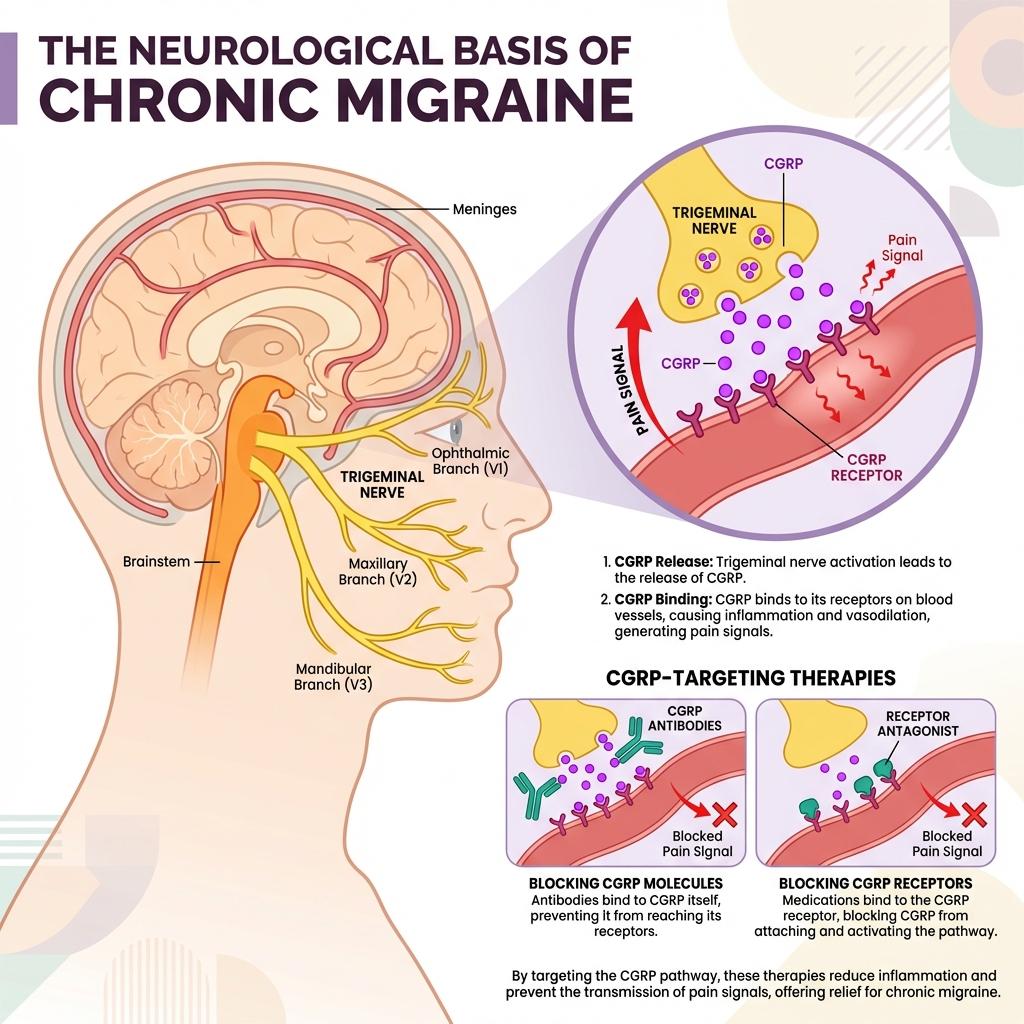
Central to migraine pain is the trigeminal nervous system. The trigeminal nerve is a major cranial nerve responsible for sensation in the face and motor functions like biting and chewing. During a migraine attack, there is an activation and sensitisation of this system, leading to the release of inflammatory neuropeptides, most notably Calcitonin Gene-Related Peptide (CGRP). CGRP is a small protein found in nerve cells and is a potent vasodilator, meaning it widens blood vessels. Its release contributes significantly to the inflammatory pain associated with migraine. The sustained activation and sensitisation of these pathways are thought to be critical in the transition from episodic to chronic migraine.
Genetic factors also play a substantial role, with many individuals having a family history of migraines. Environmental triggers, which can vary widely among individuals, often include stress, changes in sleep patterns, hormonal fluctuations (especially in women), certain foods, caffeine withdrawal, and even weather changes, all of which are common in the fast-paced, tropical environment of Singapore.
Chronic migraine can severely impact an individual’s life in Singapore, affecting work productivity, social interactions, and mental well-being. The constant fear of the next attack, coupled with the pain and associated symptoms, often leads to anxiety and depression. Recognising chronic migraine as a distinct and severe neurological condition is the first step towards effective management.
The Limitations of Traditional Painkillers and Why Advanced Treatments are Crucial
For many individuals experiencing occasional headaches or mild migraines, over-the-counter painkillers such as paracetamol, ibuprofen, or aspirin provide adequate relief. For more severe, but episodic, migraines, prescription medications like triptans (e.g., sumatriptan, zolmitriptan) are often effective. Triptans work by constricting blood vessels and blocking pain pathways in the brain.
However, when migraines become chronic, relying solely on these acute medications presents significant challenges. Firstly, their efficacy often diminishes with frequent use. Secondly, and more critically, the overuse of acute migraine medications can paradoxically worsen the condition, leading to what is known as Medication Overuse Headache (MOH).
Medication Overuse Headache (MOH) in Singapore
Medication Overuse Headache, also referred to as rebound headache, is a secondary headache disorder caused by the excessive use of acute headache medications. This condition is particularly insidious for chronic migraine sufferers, as they often increase their intake of painkillers in a desperate attempt to control their constant pain. MOH is defined as a headache that occurs on 15 or more days per month in a patient with a pre-existing primary headache disorder, resulting from the regular overuse of acute medication for more than three months. For triptans, opioids, or combination analgesics, MOH can develop with use on 10 or more days per month.
The prevalence of MOH is a significant concern in Singapore, where access to over-the-counter pain relief is readily available. Patients might not be aware of the risks associated with frequent self-medication. This cycle of pain and medication overuse can be incredibly difficult to break, requiring a careful withdrawal of the offending medication and often a shift in treatment strategy. The reliance on acute treatments alone for chronic migraine is therefore not a sustainable or effective long-term solution, highlighting the critical need for preventive and advanced therapeutic approaches.
Advanced Neurological Treatments: A New Frontier for Relief
Fortunately, the landscape of migraine management has evolved significantly beyond conventional painkillers. Neurologists in Singapore now have access to a range of advanced treatments designed to prevent migraine attacks, reduce their frequency and severity, and improve overall quality of life. These therapies target specific pathways involved in migraine pathophysiology, offering more precise and effective relief for chronic sufferers.
CGRP-Targeting Therapies (Monoclonal Antibodies)
One of the most revolutionary advancements in migraine treatment has been the development of therapies that target the Calcitonin Gene-Related Peptide (CGRP) pathway. As discussed earlier, CGRP plays a central role in transmitting migraine pain. These therapies come in the form of monoclonal antibodies, which are specially engineered proteins that either block the CGRP molecule itself or block its receptor, preventing CGRP from binding and activating pain pathways.
Several CGRP monoclonal antibodies are available or becoming available globally, with some already making their way into Singapore’s medical landscape. These include Erenumab (which targets the CGRP receptor), Fremanezumab, and Galcanezumab (which target the CGRP ligand). These medications are typically administered via subcutaneous injection (under the skin) once a month or once every three months, depending on the specific drug. Clinical trials have demonstrated their efficacy in significantly reducing the frequency of migraine days, often with a favourable side effect profile compared to older preventive medications. For Singaporean patients whose lives are severely disrupted by chronic migraine, these treatments offer a targeted and often transformative approach.
Botulinum Toxin Injections (Botox)
Botulinum toxin type A, commonly known as Botox, is another established and effective preventive treatment specifically approved for chronic migraine. It is important to note that Botox for chronic migraine is distinct from its cosmetic use and involves a specific protocol of injections into multiple sites around the head and neck. These injections are typically administered every 12 weeks (three months).
The exact mechanism by which Botox prevents chronic migraine is thought to involve blocking the release of pain-related neurotransmitters at the nerve endings, thereby inhibiting pain pathways in the central nervous system. This treatment is particularly beneficial for individuals who have tried and failed other preventive medications. In Singapore, neurologists who specialise in headache disorders are trained to administer Botox according to the PREEMPT protocol, ensuring optimal efficacy and safety.

Neuromodulation Devices
For individuals seeking non-pharmacological or adjunctive therapies, neuromodulation devices offer another promising avenue. These devices work by altering nerve activity through electrical or magnetic impulses.
- Non-Invasive Neuromodulation Devices:
- External Trigeminal Nerve Stimulation (eTNS): Devices like Cefaly stimulate the trigeminal nerve externally on the forehead. They can be used for acute treatment of migraine attacks and as a preventive measure.
- Supraorbital Nerve Stimulation: Similar to eTNS, targeting specific branches of the trigeminal nerve.
- Remote Electrical Neuromodulation (REN): Devices like Nerivio are worn on the upper arm and use electrical pulses to stimulate peripheral nerves, activating the brain’s pain modulation system to relieve migraine pain. These can be used for acute treatment of episodic and chronic migraine.
These devices offer a drug-free option, which can be particularly appealing for patients concerned about medication side effects or those with contraindications to pharmacological treatments. They are user-friendly and can be integrated into a patient’s daily routine in Singapore, offering flexibility and convenience.
- Invasive Neuromodulation (Last Resort):
- Occipital Nerve Stimulation (ONS): In select, highly refractory cases of chronic migraine where all other treatments have failed, a neurosurgeon might consider implanting a small device under the skin in the back of the head. This device delivers electrical impulses to the occipital nerves, aiming to modulate pain signals. ONS is a more invasive procedure and is typically reserved for individuals with severe, disabling chronic migraine who have exhausted all other treatment options.
Holistic Management and Lifestyle Adjustments in Singapore
While advanced neurological treatments are pivotal, a holistic approach that integrates lifestyle modifications remains crucial for effective chronic migraine management. For Singaporeans, balancing the demands of a modern urban lifestyle with chronic health conditions requires practical, actionable strategies.
Importance of a Migraine Diary
Keeping a detailed migraine diary is one of the most effective non-pharmacological tools. This involves tracking headache days, intensity, associated symptoms, medication use, potential triggers (such as specific foods, stress levels, sleep patterns, or even weather changes common in Singapore’s tropical climate), and lifestyle factors. Over time, this diary helps individuals and their healthcare providers identify patterns and triggers, leading to more personalized and effective management strategies.
Stress Management and Sleep Hygiene
Stress is a well-known migraine trigger, and Singapore’s fast-paced environment can contribute significantly to stress levels. Implementing stress-reduction techniques such as mindfulness meditation, yoga, or regular exercise can be highly beneficial. Prioritising consistent sleep hygiene, including maintaining a regular sleep schedule, creating a conducive sleep environment, and avoiding caffeine or heavy meals before bedtime, is also vital. Adequate and restorative sleep can significantly reduce migraine frequency and severity.
Dietary Considerations
While food triggers vary among individuals, some common culprits include aged cheeses, processed meats, artificial sweeteners, and certain alcoholic beverages. Identifying and avoiding personal dietary triggers through careful observation with a migraine diary can play a significant role. A balanced diet, rich in fruits, vegetables, and whole grains, supports overall health and may indirectly contribute to better migraine control.
Conclusion: Empowering Your Journey Beyond Painkillers
Chronic migraine is a complex and often debilitating neurological condition that demands more than symptomatic relief. For individuals in Singapore grappling with this persistent pain, the good news is that medical science has advanced significantly, offering a suite of sophisticated neurological treatments beyond traditional painkillers. From targeted CGRP-blocking therapies and Botulinum Toxin injections to innovative neuromodulation devices, these options provide hope for reducing migraine frequency, severity, and ultimately, restoring quality of life.
Understanding the distinction between episodic and chronic migraine, recognising the risks of medication overuse headache, and being aware of advanced treatment modalities are crucial steps towards reclaiming control. While this article provides comprehensive information, it is important to remember that this is for general awareness and not a substitute for professional medical advice.
If you are experiencing chronic migraines that are impacting your daily life, it is imperative to consult a neurologist or a pain specialist in Singapore. These medical professionals can accurately diagnose your condition, assess your individual needs, and develop a personalised treatment plan tailored to your specific circumstances, integrating both advanced therapies and lifestyle adjustments. Do not hesitate to seek expert medical attention; a life less burdened by chronic migraine is achievable with the right support and treatment strategy.

Jeremy Lee is a seasoned digital marketing director and strategist with over two decades of experience in the industry. As the founder of Sotavento Medios, I manage a diverse portfolio of over 50 businesses, helping brands grow through advanced search strategies and digital innovation. My work focuses on bridging the gap between traditional search engine optimisation and the evolving world of AI-driven answer engines.