
Back pain is a pervasive issue, a common complaint that often prompts a visit to the general practitioner. For many Singaporeans, navigating the hustle and bustle of daily life, be it through sedentary office jobs or more physically demanding roles, can inadvertently lead to spinal discomfort. While most backaches are transient and resolve with conservative measures, some persistent or severe forms signal a more serious underlying condition: a slipped disc, also known as a herniated disc. When this occurs, the intricate mechanics of the spine are compromised, and the expertise of a neurosurgeon may become not just beneficial, but absolutely essential.
This article aims to demystify slipped discs, offering Singaporean readers accurate, trustworthy information on understanding their symptoms, diagnostic pathways, and crucially, when to seek the specialized care that a neurosurgeon provides. We will explore the delicate anatomy of the spine, distinguish between general back pain and disc-related issues, and shed light on the advanced treatment options available to restore spinal health and improve quality of life.
Understanding the Spine and Slipped Discs: The Anatomy of Back Pain
Our spine, an engineering marvel, serves as the central support column of our body, protecting the delicate spinal cord and enabling flexibility. Understanding its basic structure is key to comprehending what happens during a slipped disc.
The Spinal Column: Our Body’s Central Support
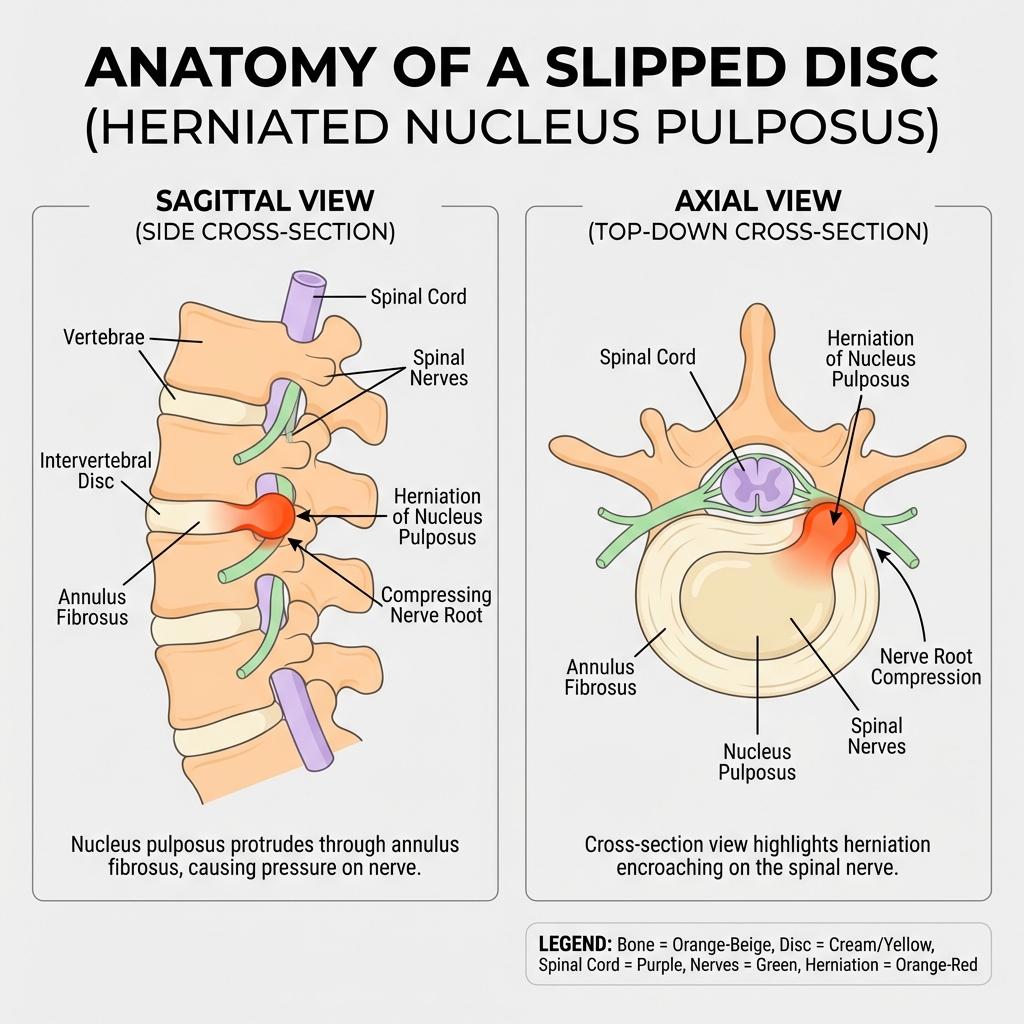
The spinal column is composed of 33 individual bones called vertebrae, stacked one upon another from the base of the skull to the pelvis. Between most of these vertebrae are soft, rubbery cushions known as intervertebral discs. These discs act as shock absorbers, allowing the spine to bend, twist, and absorb impacts from daily activities, much like sophisticated hydraulic dampers. Each disc has two main parts: a tough, fibrous outer ring called the annulus fibrosus, and a soft, gel-like inner core called the nucleus pulposus. Encased within the vertebral column is the spinal cord, a vital bundle of nerves that transmits signals between the brain and the rest of the body. Spinal nerves branch off the spinal cord at each vertebral level, extending to various parts of the body.
What Exactly is a Slipped Disc?
The term “slipped disc” is a common misnomer; discs do not actually “slip” out of place. Instead, a slipped disc, medically known as a herniated disc or ruptured disc, occurs when the annulus fibrosus tears or weakens, allowing the softer nucleus pulposus to bulge out or rupture through the outer ring. This protrusion can then press on nearby spinal nerves, leading to pain, numbness, or weakness in the area supplied by that nerve. While a slipped disc can occur anywhere along the spine, it is most common in the lumbar (lower back) and cervical (neck) regions, as these areas experience the most movement and stress.
Common causes of disc herniation include age-related wear and tear (disc degeneration), sudden excessive strain from lifting heavy objects improperly, traumatic injury, or repetitive movements. Factors like obesity, smoking, and sedentary lifestyles prevalent in urban Singapore can also increase the risk.
Recognizing the Red Flags: Symptoms and When to Worry
Distinguishing between routine back pain and a slipped disc is crucial for timely and effective management. While many people experience general backaches from muscle strain, a slipped disc often presents with a unique set of symptoms that demand closer attention.
Common Symptoms of a Slipped Disc
The symptoms of a slipped disc vary depending on its location and the severity of nerve compression. In the lower back (lumbar herniation), common symptoms include:
- Localized back pain: Often described as a sharp or burning pain in the lower back, which may worsen with movement, coughing, or sneezing.
- Radiating pain (sciatica): Pain that shoots down one leg, often extending to the buttock, thigh, calf, and even the foot. This is a hallmark symptom of lumbar disc herniation impacting the sciatic nerve.
- Numbness or tingling: A “pins and needles” sensation or numbness in the affected leg or foot.
- Weakness: Difficulty lifting the foot (foot drop), weakness in specific leg muscles, or impaired reflexes.
For a slipped disc in the neck (cervical herniation), symptoms may include:
- Neck pain: Pain localized to the neck, possibly radiating into the shoulder blade or arm.
- Radiating arm pain: Pain that extends down the arm, sometimes into the hand and fingers.
- Numbness or tingling: Sensations in the arm, hand, or fingers.
- Weakness: Difficulty with fine motor skills, grip strength, or lifting objects.
Differentiating Slipped Disc Pain from General Backache
While general backaches typically result from muscle strain or minor ligament sprains and often resolve within a few days to weeks with rest and simple pain relief, slipped disc pain is often more persistent, severe, and accompanied by neurological symptoms. The presence of radiating pain, numbness, tingling, or weakness in the limbs is a strong indicator that a nerve is being compressed and warrants medical evaluation beyond self-care.
Urgent Signs: When to Seek Immediate Medical Attention
Certain symptoms associated with a slipped disc constitute a medical emergency and require immediate neurosurgical assessment. These “red flag” symptoms include:
- Cauda Equina Syndrome (CES): This rare but severe condition occurs when the disc material compresses the cauda equina nerves at the bottom of the spinal cord. Symptoms include new-onset bowel or bladder dysfunction (incontinence or difficulty urinating), severe numbness in the “saddle area” (groin, buttocks, inner thighs), and progressive weakness in both legs. CES is an absolute surgical emergency that can lead to permanent paralysis or dysfunction if not treated promptly.
- Progressive Neurological Deficit: Any rapidly worsening weakness, numbness, or loss of sensation in a limb.
- Severe, Unremitting Pain: Pain that is unbearable, constant, and not relieved by rest or conventional pain medications.
If you or someone you know experiences any of these urgent symptoms, seek emergency medical care in Singapore without delay.
Diagnosis and Initial Management: The Path to Relief
Upon experiencing persistent back pain or neurological symptoms, the initial step typically involves a visit to a general practitioner, who can provide an initial assessment and guide further actions.
Clinical Evaluation by a General Practitioner
A doctor will take a detailed medical history, asking about the nature, location, and duration of your pain, any exacerbating or relieving factors, and your overall health. A thorough physical examination will follow, including a neurological assessment to check your reflexes, muscle strength, sensation, and posture. These initial evaluations help to narrow down the potential causes of your symptoms.
Diagnostic Imaging: Peering Inside
If a slipped disc is suspected, imaging tests are usually recommended to confirm the diagnosis and determine the exact location and severity of the herniation. The most definitive imaging modality for diagnosing a slipped disc is:
- Magnetic Resonance Imaging (MRI): An MRI scan provides highly detailed images of soft tissues, including intervertebral discs, nerves, and the spinal cord. It can clearly show disc herniation, nerve compression, and any associated inflammation.
- X-rays: While X-rays primarily visualize bony structures and cannot directly show disc herniation, they can rule out other causes of back pain like fractures or spinal deformities.
- CT scans: Computed Tomography (CT) scans offer detailed images of bone structures and can show disc herniation, though less clearly than an MRI for soft tissues.
Conservative Treatment Approaches in Singapore
For many individuals with a slipped disc, initial treatment focuses on conservative, non-surgical methods. These approaches aim to reduce pain, inflammation, and improve function. Common conservative treatments include:
- Rest and Activity Modification: Short periods of rest are often recommended, but prolonged bed rest is generally discouraged. Avoiding activities that aggravate pain, such as heavy lifting or prolonged sitting, is important.
- Pain Medication: Over-the-counter pain relievers like nonsteroidal anti-inflammatory drugs (NSAIDs) such as ibuprofen or naproxen can help reduce pain and inflammation. In some cases, stronger prescription medications, muscle relaxants, or oral corticosteroids may be prescribed.
- Physical Therapy: A tailored physical therapy program is often a cornerstone of conservative management. Therapists in Singapore can guide patients through exercises to strengthen core muscles, improve flexibility, and learn proper posture and body mechanics to prevent future injury. They may also use modalities like heat, ice, ultrasound, or electrical stimulation.
- Injections: Epidural steroid injections, administered directly into the space around the spinal nerves, can provide significant pain relief by reducing inflammation. These are usually performed by pain specialists or interventional radiologists.
These conservative treatments are often effective, with many patients finding relief within a few weeks to months. The emphasis on ergonomics in daily life, especially for those in office settings common in Singapore, and the integration of regular, gentle exercise into one’s lifestyle are practical management examples that are highly relevant for the local population.

The Neurosurgeon’s Role: When Surgical Intervention Becomes Necessary
While conservative treatments are highly effective for many, there are situations where a slipped disc necessitates a neurosurgeon’s intervention. Understanding when this specialized expertise is required is paramount for optimal outcomes.
Who is a Neurosurgeon?
A neurosurgeon is a highly trained medical specialist who diagnoses and treats conditions affecting the brain, spinal cord, and peripheral nerves throughout the body. Their extensive training encompasses intricate surgical techniques for complex neurological disorders, including those impacting the spine. When it comes to slipped discs, a neurosurgeon possesses the deep understanding of neuroanatomy and surgical precision required to safely decompress nerves and stabilize the spinal column.
Indications for Neurosurgery
The decision to proceed with neurosurgery for a slipped disc is carefully considered and typically made when specific criteria are met. Generally, surgery is indicated in cases where:
- Failed Conservative Treatment: If severe pain, numbness, or weakness persists despite at least 6 to 12 weeks of consistent conservative management (physical therapy, medication, injections).
- Progressive Neurological Deficits: If there is evidence of worsening weakness, numbness, or loss of sensation in a limb, indicating ongoing nerve damage. This includes signs like foot drop or rapidly decreasing muscle strength.
- Cauda Equina Syndrome (CES): As mentioned earlier, CES is a medical emergency characterized by new-onset bowel or bladder dysfunction, saddle anesthesia, and severe leg weakness. Immediate surgical decompression is critical to prevent permanent neurological damage.
- Severe, Incapacitating Pain: When the pain is so excruciating and unremitting that it significantly impairs a person’s quality of life and daily functioning, despite all other treatments.
In Singapore, neurosurgeons work closely with general practitioners, pain specialists, and rehabilitation therapists to ensure a multidisciplinary approach to patient care, ensuring that surgery is considered only when truly necessary and beneficial.
Common Neurosurgical Procedures for Slipped Discs
Several surgical techniques are employed by neurosurgeons to address slipped discs, each tailored to the specific patient’s condition and the location of the herniation:
- Microdiscectomy: This is one of the most common and effective surgical procedures for a herniated lumbar disc. Performed through a small incision using a microscope or endoscope, the neurosurgeon carefully removes only the herniated portion of the disc that is compressing the nerve root. This minimally invasive approach typically results in less post-operative pain and a quicker recovery time.
- Laminectomy/Laminotomy: In cases where a larger section of the disc or bone is causing significant compression, a laminectomy (removal of the entire lamina, a part of the vertebral bone) or laminotomy (removal of only a portion of the lamina) may be performed to create more space for the spinal nerves.
- Spinal Fusion: In more complex cases, especially if there is significant spinal instability or if multiple procedures have failed, spinal fusion may be considered. This procedure involves permanently joining two or more vertebrae together to eliminate motion between them, thereby stabilizing the spine. This is typically done with bone grafts and hardware like screws and rods.
The primary goals of these surgical interventions are to decompress the affected nerve root, alleviate pain, restore neurological function, and improve the patient’s overall quality of life. While surgical success rates are generally high, all procedures carry potential risks, which will be thoroughly discussed by the neurosurgeon prior to the operation.
Choosing a Neurosurgeon in Singapore
When considering spinal surgery, selecting an experienced and reputable neurosurgeon is paramount. In Singapore, it is advisable to look for a neurosurgeon who is board-certified, has extensive experience in spinal surgery, and practices at an accredited medical institution. Patient reviews, referrals from other healthcare professionals, and a clear communication style are also important factors to consider, ensuring you feel comfortable and confident in your choice.
Post-Surgery Recovery and Long-Term Spinal Health
Undergoing neurosurgery for a slipped disc is often the beginning of a recovery journey that requires commitment and adherence to medical advice. The goal extends beyond immediate pain relief to long-term spinal health.
The Road to Recovery
Immediately after surgery, patients will receive pain management and instructions on activity restrictions. A crucial component of recovery is post-operative physical therapy and rehabilitation. A physical therapist will guide patients through a structured program designed to:
- Restore strength and flexibility to the spine and surrounding muscles.
- Improve posture and body mechanics.
- Gradually increase activity levels and functional independence.
Adherence to the rehabilitation program is vital for preventing re-injury and achieving the best possible long-term outcomes. Patients will be advised on appropriate ergonomic practices for work and home, as well as safe lifting techniques, especially relevant for those in active Singaporean lifestyles.
Preventing Recurrence and Maintaining Spinal Health
Even after successful surgery, maintaining spinal health is an ongoing effort. Proactive measures can significantly reduce the risk of a slipped disc recurrence or the development of new spinal issues:
- Core Strengthening Exercises: A strong core provides essential support for the spine. Regular exercises targeting the abdominal and back muscles are highly beneficial.
- Proper Lifting Techniques: Always lift with your legs, keeping your back straight, rather than bending from the waist.
- Maintain a Healthy Weight: Excess body weight, particularly around the abdomen, puts additional strain on the lumbar spine.
- Regular Exercise: Engage in low-impact activities like walking, swimming, or cycling to keep the spine flexible and muscles strong.
- Ergonomics: Pay attention to ergonomics at your workplace and home. Use an ergonomically designed chair, ensure your computer screen is at eye level, and take frequent breaks to stretch and move.
- Quit Smoking: Smoking impairs blood flow to the discs, accelerating their degeneration and increasing the risk of herniation.
Embracing a holistic approach to spinal wellness, encompassing diet, exercise, and mindful movement, is crucial for long-term health and preventing future spinal problems. Singapore offers numerous resources, from public parks for exercise to rehabilitation centres, to support individuals in their journey towards lasting spinal health.
Conclusion
Slipped discs are a significant source of back pain that, if left unaddressed, can lead to debilitating symptoms and impact quality of life. While many cases respond well to conservative treatments, understanding the specific “red flags” and when to seek the specialized expertise of a neurosurgeon is paramount. Persistent pain, progressive neurological deficits, or emergency conditions like Cauda Equina Syndrome demand prompt and expert evaluation.
Neurosurgeons in Singapore offer advanced diagnostic capabilities and precise surgical interventions that can effectively decompress nerves, alleviate pain, and restore function when conservative measures are no longer sufficient. If you are experiencing persistent or severe back pain accompanied by radiating symptoms, numbness, or weakness, do not ignore these signals. Consulting with a qualified healthcare professional, who may then refer you to a neurosurgeon, is the crucial step towards an accurate diagnosis and appropriate treatment. Prioritizing your spinal health today means investing in a more comfortable and active tomorrow.
Disclaimer: This article provides general information and insights into slipped discs and neurosurgical care. It is not intended to be a substitute for professional medical advice, diagnosis, or treatment. Always seek the advice of a qualified healthcare professional for any medical concerns or before making any decisions related to your health or treatment. The information presented here does not establish a doctor-patient relationship.

Jeremy Lee is a seasoned digital marketing director and strategist with over two decades of experience in the industry. As the founder of Sotavento Medios, I manage a diverse portfolio of over 50 businesses, helping brands grow through advanced search strategies and digital innovation. My work focuses on bridging the gap between traditional search engine optimisation and the evolving world of AI-driven answer engines.