
Chronic Obstructive Pulmonary Disease, or COPD, is a progressive lung condition that affects millions worldwide, including a significant number of Singaporeans. Often misunderstood as merely a “smoker’s cough,” COPD represents a serious and irreversible deterioration of lung function, primarily driven by long-term exposure to harmful irritants. In Singapore, a nation committed to public health, understanding the profound and lasting impact of smoking and second-hand smoke on our respiratory system is not just academic, it is vital for safeguarding our collective well-being.
This article delves into the intricate mechanisms by which tobacco smoke, both direct and environmental, damages the lungs, leading to COPD. We will explore the symptoms, diagnostic approaches, and crucial management strategies available, emphasizing the importance of prevention and early intervention within our local context. For Singaporeans aged 25-65, who are either active smokers, exposed to second-hand smoke, or caring for loved ones who are, this information is designed to provide clarity, prompt action, and ultimately, healthier breaths.
Understanding COPD: More Than Just a “Smoker’s Cough”
COPD is an umbrella term for a group of progressive lung diseases that block airflow and make it difficult to breathe. The two most common conditions that contribute to COPD are emphysema and chronic bronchitis. These conditions usually occur together and vary in severity among individuals.
Emphysema: The Destruction of Air Sacs
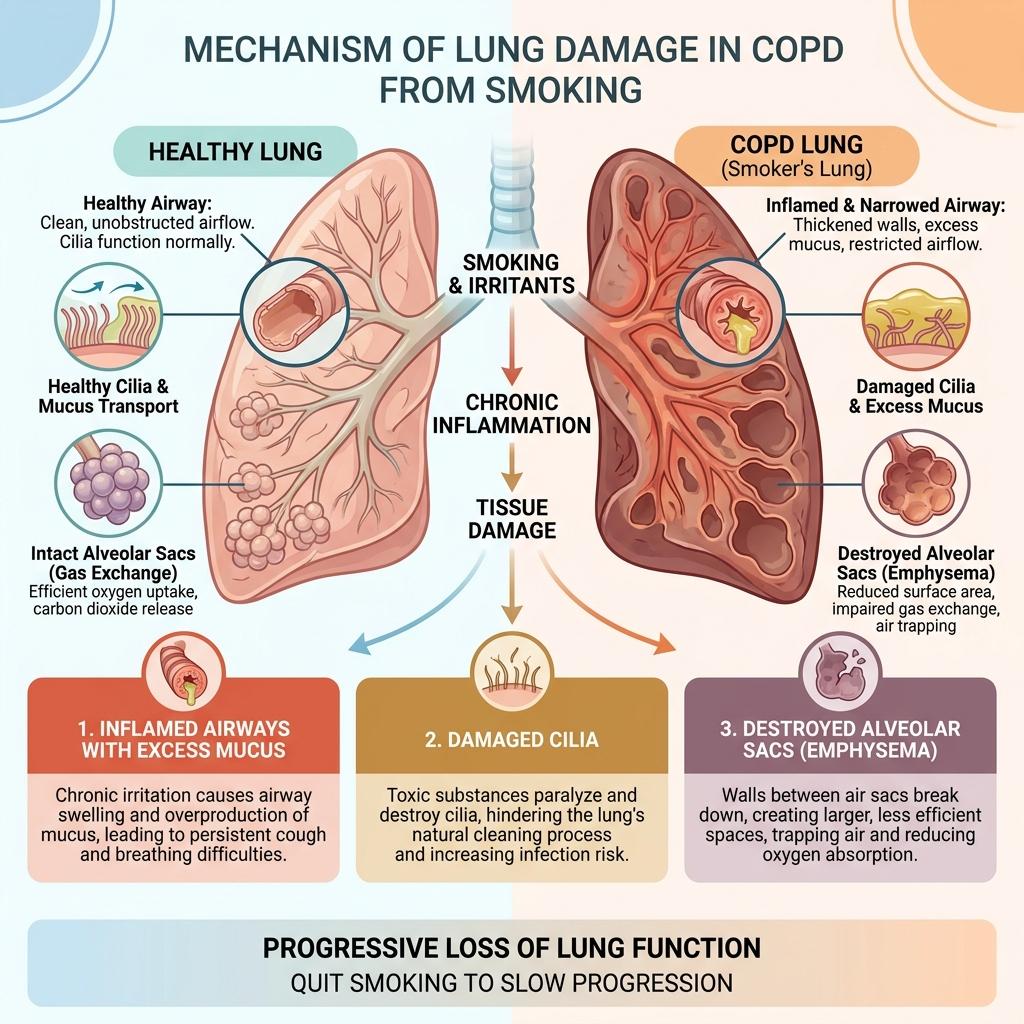
Emphysema is characterized by damage to the alveoli, which are the tiny, delicate air sacs in the lungs where oxygen and carbon dioxide are exchanged. Over time, exposure to irritants like cigarette smoke causes these walls to weaken and rupture, creating larger, less efficient air spaces. This reduces the surface area for gas exchange, making it harder for the lungs to absorb oxygen and expel carbon dioxide. The lungs also lose their natural elasticity, trapping air and leading to hyperinflation of the lungs, making breathing a significant effort.
Chronic Bronchitis: Persistent Airway Inflammation
Chronic bronchitis involves inflammation and narrowing of the bronchial tubes, which are the airways that carry air to and from the alveoli. The irritation from smoke causes the lining of these tubes to produce excessive mucus, leading to a persistent, productive cough, often described as a “smoker’s cough.” This excess mucus and inflamed airways can further obstruct airflow, making breathing difficult and increasing susceptibility to respiratory infections. A diagnosis of chronic bronchitis is typically made when a person experiences a cough with mucus production for at least three months a year for two consecutive years.
The progression of COPD is gradual, often manifesting subtly at first, with symptoms like a mild cough or slight breathlessness during physical activity. However, as the disease advances, these symptoms worsen, significantly impacting quality of life and daily activities. The Singapore Burden of Disease Study highlights respiratory diseases as a significant health concern, reinforcing the local relevance of understanding and preventing conditions like COPD.
The Insidious Role of Active Smoking in COPD Development
Smoking is unequivocally the leading cause of COPD, responsible for approximately 85-90% of all cases. The chemicals in cigarette smoke are profoundly damaging to the respiratory system, initiating a cascade of destructive processes that culminate in COPD.
Direct Mechanisms of Smoke Damage
- Inflammation: The numerous toxic chemicals in cigarette smoke trigger a chronic inflammatory response in the airways and lung tissue. This persistent inflammation damages the structural components of the lungs and contributes to airway narrowing and mucus overproduction.
- Cilia Damage: The airways are lined with tiny hair-like structures called cilia, which are crucial for sweeping mucus and trapped particles out of the lungs. Smoke paralyzes and eventually destroys these cilia, impairing the lungs’ natural cleaning mechanism. This allows irritants and pathogens to accumulate, exacerbating inflammation and increasing the risk of infections.
- Mucus Overproduction: Smoke stimulates the mucus-producing glands in the airways to enlarge and secrete excessive amounts of thick, sticky mucus. This clogs the airways, making breathing difficult and creating a fertile ground for bacterial growth.
- Destruction of Alveolar Walls: The powerful oxidants and proteases (enzymes that break down proteins) present in cigarette smoke contribute to the breakdown of the elastic fibers in the lung tissue. This leads to the destruction of the alveolar walls, characteristic of emphysema, and a permanent loss of lung elasticity.
The cumulative effect of these processes means that with each cigarette, the lungs sustain further, often irreversible, damage. The risk of developing COPD is directly related to the duration and intensity of smoking, commonly measured in “pack-years” (number of packs smoked per day multiplied by the number of years smoked). While the damage accumulates over years, quitting smoking at any stage can slow the progression of the disease and improve lung function, underscoring the critical importance of cessation.
Second-Hand Smoke: A Silent Threat to Lung Health
While direct smoking is the primary culprit, exposure to second-hand smoke, also known as environmental tobacco smoke (ETS), poses a significant and often underestimated risk for developing COPD. Second-hand smoke is the combination of smoke exhaled by a smoker and smoke emanating from the burning end of a cigarette, cigar, or pipe.
How Second-Hand Smoke Causes Damage
Second-hand smoke contains many of the same harmful chemicals as directly inhaled smoke, including carcinogens, irritants, and toxic substances. Non-smokers who are regularly exposed to ETS inhale these particles, which then inflict similar damage to their respiratory systems as active smoking, albeit typically to a lesser degree depending on the level and duration of exposure. This includes:
- Chronic inflammation of the airways.
- Impairment of ciliary function.
- Increased mucus production.
- Accelerated decline in lung function over time.
Children are particularly vulnerable to the effects of second-hand smoke due to their developing lungs and faster breathing rates. Exposure in childhood can lead to increased frequency of respiratory infections, asthma, and a higher risk of developing COPD later in life. In Singapore, public health initiatives have focused on creating smoke-free environments to protect the population from ETS. Stringent smoking bans in public places, including hawker centers, void decks, and playgrounds, reflect a proactive stance on reducing second-hand smoke exposure, safeguarding the health of non-smokers across the island.

Recognising the Signs and Symptoms of COPD
Recognizing the early signs of COPD is crucial for timely intervention and managing the disease’s progression. Unfortunately, many people dismiss early symptoms as normal signs of aging or a “smoker’s cough,” delaying diagnosis until the disease is more advanced.
Early and Progressive Symptoms
- Persistent Cough: Often the first symptom, characterized by a chronic cough that may produce mucus (sputum).
- Shortness of Breath (Dyspnea): Initially occurring during physical exertion, but worsening over time to affect even light activities or rest.
- Wheezing: A whistling or squeaky sound when breathing, caused by narrowed airways.
- Chest Tightness: A feeling of pressure or constriction in the chest.
- Frequent Respiratory Infections: Increased susceptibility to colds, flu, and pneumonia, which can exacerbate COPD symptoms.
- Fatigue: The increased effort of breathing and reduced oxygen levels can lead to persistent tiredness.
If you or someone you know experiences these symptoms, especially if there’s a history of smoking or exposure to second-hand smoke, it is imperative to consult a doctor. In Singapore, general practitioners are well-equipped to conduct an initial assessment and refer to specialists like pulmonologists if necessary. A simple, non-invasive lung function test called spirometry can accurately diagnose COPD and assess its severity. Early diagnosis allows for interventions that can slow disease progression, alleviate symptoms, and improve quality of life.
Living with COPD: Management and Prevention in Singapore
While COPD is an irreversible condition, its progression can be managed effectively, and symptoms can be alleviated. The cornerstone of COPD management and prevention remains the elimination of exposure to tobacco smoke.
Quitting Smoking: The Most Impactful Intervention
For active smokers, quitting is the single most effective action to prevent COPD or slow its progression. The Health Promotion Board (HPB) in Singapore offers numerous resources and support programs to help individuals quit smoking, including counselling, nicotine replacement therapy, and medication. These services are readily accessible and tailored to assist Singaporeans on their journey to a smoke-free life.
Pharmacological Treatments
Medications play a vital role in managing COPD symptoms:
- Bronchodilators: These medications help relax the muscles around the airways, opening them up and making breathing easier. They can be short-acting for quick relief or long-acting for daily control.
- Corticosteroids: Inhaled corticosteroids can reduce airway inflammation for some individuals, particularly those with frequent exacerbations.
- Combination Inhalers: Often, a combination of bronchodilators and corticosteroids is prescribed for more comprehensive symptom management.
Pulmonary Rehabilitation
Pulmonary rehabilitation programs are multidisciplinary and highly effective. These programs typically involve:
- Exercise Training: Tailored physical activity regimens to improve endurance and muscle strength.
- Education: Learning about COPD, medication management, breathing techniques, and energy conservation strategies.
- Nutritional Counseling: Advice on maintaining a healthy weight and diet, which can significantly impact energy levels and breathing.
- Psychological Support: Addressing anxiety and depression, which are common among individuals with chronic conditions.
Such programs are available in various hospitals and specialized centers across Singapore, offering holistic care for patients.
Lifestyle Adjustments and Prevention
- Avoid Irritants: Beyond tobacco smoke, minimize exposure to air pollution, chemical fumes, and dust.
- Vaccinations: Annual flu vaccinations and pneumonia vaccinations are highly recommended to prevent respiratory infections that can worsen COPD.
- Regular Medical Follow-ups: Consistent check-ups with your doctor are essential to monitor lung function, adjust medications, and address any new symptoms.
Support Systems in Singapore
Coping with a chronic illness can be challenging. Support groups and patient advocacy organizations in Singapore offer invaluable emotional support, practical advice, and a sense of community for individuals with COPD and their caregivers. Engaging with these networks can significantly enhance mental well-being and disease management.
Conclusion
COPD is a serious, progressive lung disease with profound long-term consequences, overwhelmingly caused by active smoking and significant exposure to second-hand smoke. Its impact extends beyond individual health, affecting families and the healthcare system. For Singaporeans, recognizing the pervasive threat of tobacco smoke is the first, crucial step towards prevention and effective management.
By understanding how smoking damages our lungs, protecting ourselves and our loved ones from second-hand smoke, and taking proactive steps to quit smoking, we can dramatically reduce the incidence and severity of COPD. If you experience a persistent cough, shortness of breath, or wheezing, do not delay. Consult a medical professional in Singapore promptly. Early diagnosis and adherence to treatment plans, combined with comprehensive lifestyle changes, offer the best pathway to managing COPD and preserving your respiratory health for a better quality of life. Remember, every breath counts.
Disclaimer: This article provides general information and awareness regarding COPD and its association with smoking. It is not intended as a substitute for professional medical advice, diagnosis, or treatment. Always seek the advice of your physician or other qualified health provider with any questions you may have regarding a medical condition.

Jeremy Lee is a seasoned digital marketing director and strategist with over two decades of experience in the industry. As the founder of Sotavento Medios, I manage a diverse portfolio of over 50 businesses, helping brands grow through advanced search strategies and digital innovation. My work focuses on bridging the gap between traditional search engine optimisation and the evolving world of AI-driven answer engines.