
Introduction
In Singapore, hernia repair surgery is a critical topic for many individuals, especially those involved in physically demanding jobs or experiencing lifestyle changes with age. Hernias can cause discomfort, pain, and impact daily activities. The decision between open and laparoscopic hernia repair techniques is significant, often raising concerns about recovery time, effectiveness, and risk factors. Understanding these options helps in making well-informed health decisions.
Understanding Hernia and Its Causes
A hernia occurs when an internal organ or tissue bulges through a weak area of muscle. Commonly occurring in the abdomen, groin, or upper thigh, hernias are often due to a combination of muscle weakness and strain. Conditions such as obesity, heavy lifting, coughing, or straining during bowel movements can exacerbate the risk.
Types of Hernias Affecting Singaporeans
Among Singaporeans, inguinal and incisional hernias are most prevalent. Inguinal hernias occur in the groin area, often affecting men, while incisional hernias follow abdominal surgery. Each type requires distinct surgical approaches, either open or laparoscopic.
Open Hernia Repair: Key Features
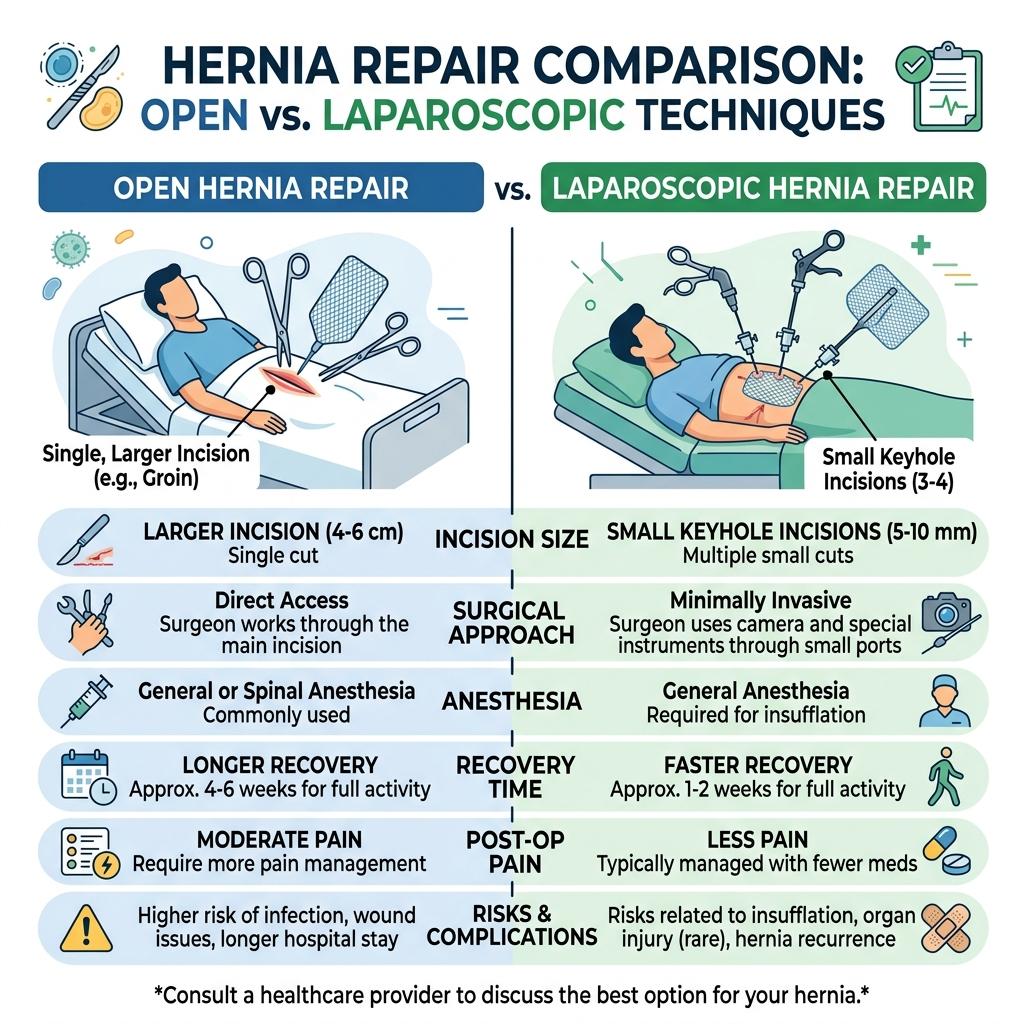
Open hernia repair, also known as open mesh repair, involves making a single larger incision in the area of the hernia bulge. The surgeon pushes the protruding tissue back into place and strengthens the muscle wall using a synthetic mesh.
Advantages of Open Repair
- Less complex technology and wider availability in various healthcare settings
- Proven track record in terms of effectiveness and durability
- Suitable for large hernias or complicated cases where visibility is paramount
Drawbacks to Consider
The recovery period may be longer, with a higher chance of infection or complications at the incision site. Open repair might also result in more significant postoperative pain compared to laparoscopic methods.
Laparoscopic Hernia Repair: An Overview
Laparoscopic hernia repair is a minimally invasive surgery technique using small incisions and guided cameras. It is known for its quicker recovery and less postoperative discomfort.
Benefits of Laparoscopic Approach
- Reduced recovery times and less postoperative pain
- Lower risk of infection and fewer visible scars
- Suitable for bilateral hernias as it allows simultaneous repair
Considerations and Limitations
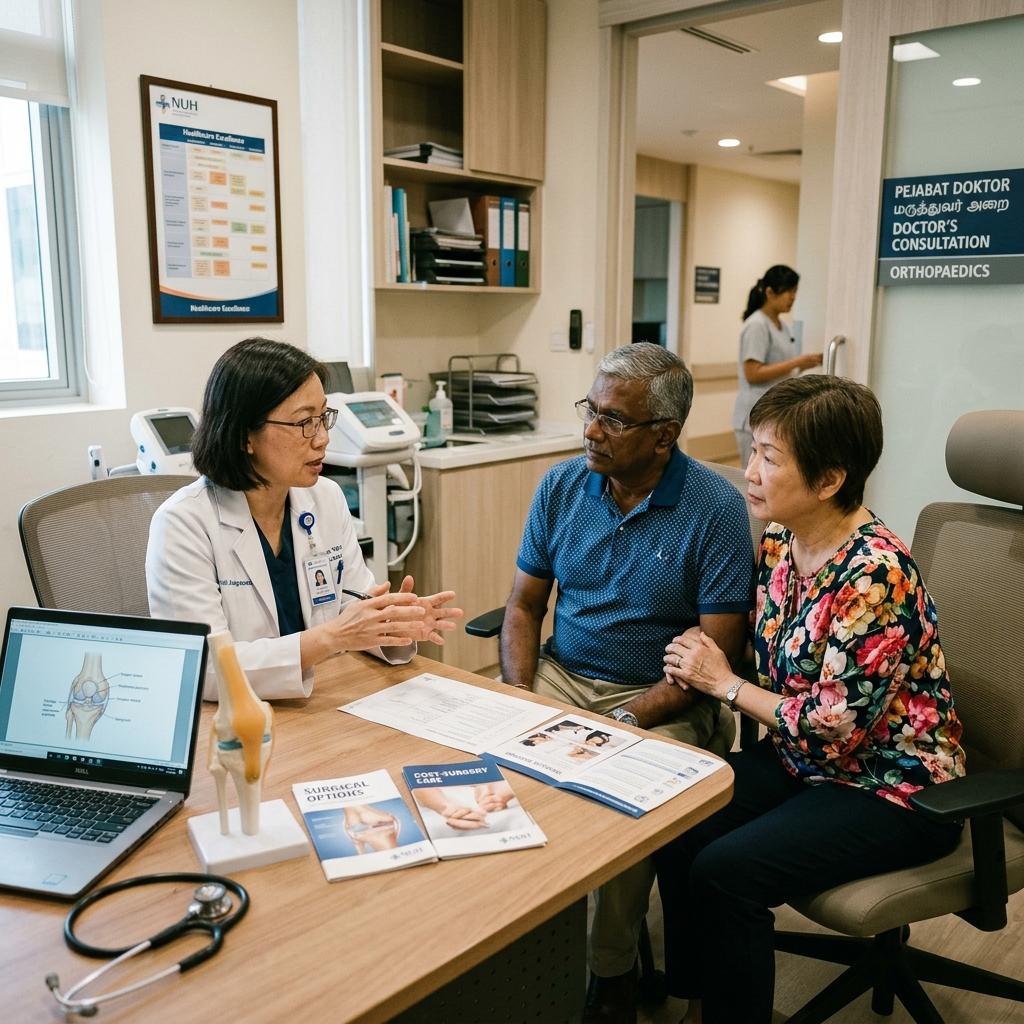
Laparoscopic repair requires a highly skilled surgical team and may not be suitable for all patients, particularly those with prior abdominal surgeries or specific health conditions. It’s important to evaluate the surgeon’s experience with laparoscopic techniques when considering this option.
Comparative Outcomes in Singapore’s Healthcare Context
In Singapore, the choice between open and laparoscopic hernia repair often depends on individual health conditions, hospital resources, and surgeon expertise. Public and private hospital systems in Singapore both offer these procedures, but patient accessibility might vary based on insurance coverage and hospital policies. Engaging in thorough consultations with healthcare providers is necessary for a decision that suits both medical needs and personal circumstances.
Conclusion: Empowering Informed Decisions
Choosing between open and laparoscopic hernia repair in Singapore involves understanding the specific advantages and challenges of each technique. Evaluating factors such as recovery time, potential for complications, cost, and personal health circumstances ensures a decision aligned with individual needs. It’s paramount to seek advice from seasoned medical professionals in Singapore to assess personal suitability for either procedure and discuss the recovery process in detail. The right choice, supported by professional guidance, can lead to successful management and improved quality of life.
If you suspect a hernia, it’s crucial to consult with a healthcare provider promptly to explore these surgical options and tailor a solution that is best for you.
Jeremy Lee is a seasoned digital marketing director and strategist with over two decades of experience in the industry. As the founder of Sotavento Medios, I manage a diverse portfolio of over 50 businesses, helping brands grow through advanced search strategies and digital innovation. My work focuses on bridging the gap between traditional search engine optimisation and the evolving world of AI-driven answer engines.