
For decades, lung cancer was almost synonymous with smoking. The narrative was clear: quit smoking, and significantly reduce your risk. While this remains fundamentally true, a concerning trend has emerged, particularly here in Singapore: an increasing number of non-smokers are being diagnosed with lung cancer. This shift challenges conventional understanding and brings a critical question to the forefront for many Singaporeans aged 25-65: if I do not smoke, why should I be concerned about lung cancer screening?
This article aims to provide a comprehensive and accurate understanding of why lung cancer is increasingly affecting non-smokers in Singapore. We will delve into the evolving risk factors, the importance of early detection, and the current landscape of lung cancer screening, offering actionable insights tailored to our local context. Our goal is to empower you with knowledge, enabling informed decisions about your lung health and when to seek medical attention.
The Evolving Landscape of Lung Cancer in Singapore
Lung cancer remains one of the leading causes of cancer-related deaths globally, and Singapore is no exception. Historically, smoking has been the predominant risk factor. However, recent data from the Singapore Cancer Registry indicates a growing proportion of lung cancer cases among individuals who have never smoked or who quit many years ago. This demographic shift necessitates a re-evaluation of public health strategies and personal vigilance.
Demographics and Trends in Singapore
Observations in Singapore mirror global trends where adenocarcinomas, a type of non-small cell lung cancer, are more commonly seen in non-smokers and are now the most prevalent histological subtype of lung cancer. This particular subtype often develops in the outer regions of the lungs, making its early detection challenging without specific screening methods. The rising incidence among non-smokers, particularly women, underscores a crucial public health challenge in our city-state.
Shifting Risk Factors: Beyond Tobacco
While tobacco smoke remains the single largest preventable cause of lung cancer, accounting for a significant majority of cases, it is no longer the only factor driving the disease. Researchers and clinicians are increasingly focusing on a multitude of other environmental, genetic, and lifestyle factors that contribute to lung cancer development in individuals who have never smoked. Understanding these diverse risk factors is paramount for effective prevention and early detection strategies in a non-smoking population.
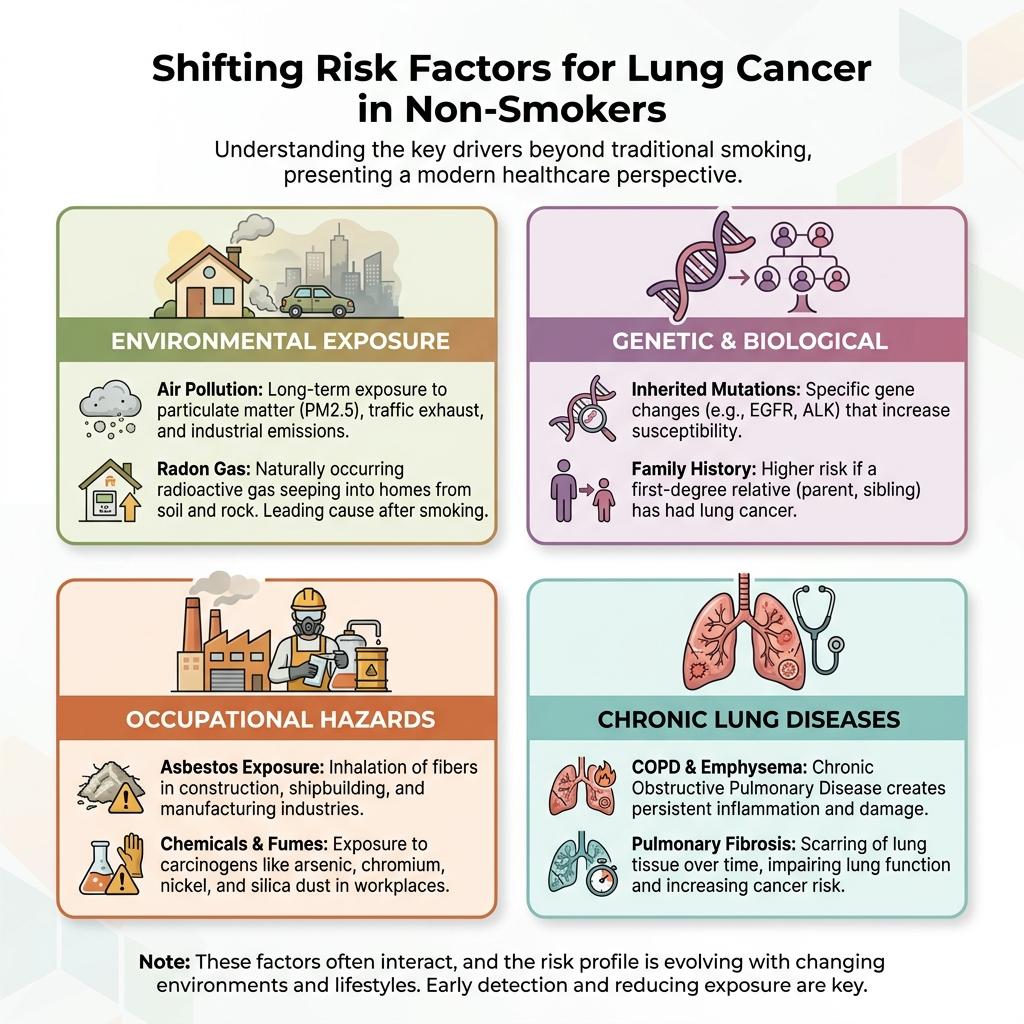
Unveiling the Non-Smoking Risk Factors
For non-smokers, the risk of lung cancer is not zero; it is influenced by a complex interplay of factors that often go unnoticed. Identifying these risks is the first step towards mitigating them.
Environmental Exposures in Singapore
Singapore, with its urban environment and regional influences, presents unique considerations for environmental risk factors.
- Air Pollution: Long-term exposure to fine particulate matter (PM2.5), a common component of air pollution, is a recognised carcinogen. Sources include vehicle exhaust, industrial emissions, and transboundary haze. Singapore experiences varying levels of air pollution, and continuous monitoring and public health advisories are in place. Chronic exposure to these pollutants can lead to inflammation and DNA damage in lung cells, increasing cancer risk.
- Radon Gas: Radon is a naturally occurring radioactive gas that comes from the breakdown of uranium in soil and rock. It can seep into homes and buildings, accumulating to dangerous levels, especially in enclosed spaces. While not as widely publicised as in some other countries, radon exposure is the second leading cause of lung cancer after smoking globally. In Singapore, geological surveys indicate varying levels of radon, and it is a factor that should not be overlooked, particularly in older or less well-ventilated properties.
- Secondhand Smoke (Passive Smoking): Even if you do not smoke yourself, exposure to secondhand smoke dramatically increases your risk of developing lung cancer. This is particularly relevant in social settings or within households where a family member smokes. Singapore has strict anti-smoking laws in public places, but exposure in private settings remains a concern for non-smokers.
Genetic Predisposition and Family History
Genetics play a significant role in an individual’s susceptibility to various diseases, including lung cancer. If you have a first-degree relative (parent, sibling, or child) who had lung cancer, especially at a younger age or if they were a non-smoker, your own risk may be elevated. Specific genetic mutations or inherited predispositions can increase the likelihood of developing the disease, even in the absence of traditional risk factors. Research is ongoing to identify these genetic markers, which could eventually inform more personalised screening strategies.

Occupational Hazards
Certain occupations involve exposure to carcinogens that can significantly increase the risk of lung cancer. These include:
- Asbestos: Once widely used in construction, shipbuilding, and manufacturing, asbestos exposure is a known cause of lung cancer and mesothelioma. Although its use is now heavily regulated or banned in many countries, including Singapore, individuals with historical occupational exposure (e.g., in shipyards, construction sites, or older industrial settings) remain at risk for decades after initial exposure.
- Industrial Chemicals and Heavy Metals: Exposure to substances like arsenic, chromium, nickel, cadmium, and polycyclic aromatic hydrocarbons (PAHs) in industries such as mining, smelting, and certain chemical manufacturing processes can elevate lung cancer risk. Singapore’s industrial sector, while adhering to stringent safety standards, still requires vigilant monitoring and protective measures for workers.
Chronic Lung Diseases and Inflammation
Pre-existing chronic lung conditions can also contribute to an increased risk of lung cancer in non-smokers. Conditions such as idiopathic pulmonary fibrosis (a disease that causes scarring of the lungs), chronic obstructive pulmonary disease (COPD) – even in non-smokers, and a history of severe or recurrent lung infections can create a chronic inflammatory environment that promotes cellular changes leading to cancer. The persistent inflammation and damage to lung tissue over time can increase cellular turnover and the likelihood of malignant transformation.
Understanding Lung Cancer Screening for Non-Smokers
Given the rising incidence of lung cancer in non-smokers, the question of screening becomes increasingly pertinent. Early detection is crucial for improving survival rates, as lung cancer often presents with advanced symptoms when it is too late for curative treatment.
Current Screening Guidelines and Limitations
Globally, and in Singapore, current guidelines for lung cancer screening primarily recommend annual low-dose computed tomography (LDCT) scans for high-risk individuals, typically defined by age and smoking history. For instance, the US Preventive Services Task Force (USPSTF) recommends annual LDCT for adults aged 50 to 80 years with a 20 pack-year smoking history who currently smoke or have quit within the past 15 years.
The challenge for non-smokers is that they often fall outside these established criteria, even if they have other significant risk factors. This means that many non-smokers at elevated risk may not be considered eligible for routine screening under current guidelines, potentially leading to delayed diagnoses. It is vital for healthcare providers to engage in shared decision-making with patients, considering their individual risk profiles beyond just smoking status.
The Role of Low-Dose Computed Tomography (LDCT) in Early Detection
LDCT is a specialized X-ray technique that produces detailed images of the lungs. It is performed without contrast and uses a lower radiation dose than a conventional CT scan. Studies, such as the National Lung Screening Trial (NLST), have demonstrated that LDCT screening can significantly reduce lung cancer mortality in high-risk individuals by detecting the disease at an earlier, more treatable stage.
For non-smokers with identified risk factors (e.g., strong family history, significant environmental or occupational exposures, certain chronic lung diseases), the potential benefits of LDCT screening might outweigh the risks. However, the decision to screen must be made in consultation with a medical professional, weighing the potential for false positives, radiation exposure, and the psychological impact of abnormal findings against the benefits of early detection. In Singapore, discussions are ongoing among medical experts regarding expanding screening criteria to include certain high-risk non-smokers.
Challenges and Benefits in the Singaporean Context
Implementing widespread lung cancer screening for non-smokers in Singapore presents several challenges, including the identification of appropriate high-risk groups, the cost-effectiveness of screening, and ensuring adequate healthcare infrastructure. However, the benefits of early detection are substantial, leading to less aggressive treatments, improved quality of life, and better survival outcomes. Tailoring screening recommendations to the Singaporean population, considering local demographics and unique risk exposures, is an ongoing area of focus for public health bodies and medical institutions.
Navigating Diagnosis and Management in Singapore
Should a suspicious finding emerge from a scan or symptoms develop, understanding the diagnostic and management pathways is crucial for Singaporeans.
Diagnostic Pathways: Biopsy, Staging
If a suspicious nodule or mass is identified, further diagnostic steps are necessary. These typically include:
- Biopsy: A small tissue sample is taken from the suspicious area for pathological examination. This can be done via bronchoscopy (a thin tube with a camera inserted into the airways), needle biopsy (a needle inserted through the chest wall), or surgical biopsy. The type of biopsy depends on the location and size of the nodule.
- Staging: Once lung cancer is confirmed, staging determines the extent of the cancer’s spread. This involves imaging tests like PET-CT scans, MRI, or bone scans to see if the cancer has spread to lymph nodes or other organs. Accurate staging is essential for guiding treatment decisions.
Treatment Modalities in Singapore
Treatment for lung cancer in Singapore is highly individualised, based on the type, stage, and genetic profile of the cancer, as well as the patient’s overall health. Options include:
- Surgery: For early-stage lung cancers, surgical removal of the tumour and surrounding lung tissue may be curative. This is often performed by thoracic surgeons at major hospitals like the National University Hospital or Singapore General Hospital.
- Radiation Therapy: High-energy rays are used to kill cancer cells. This can be used alone, before or after surgery, or in combination with chemotherapy.
- Chemotherapy: Drugs are used to kill cancer cells throughout the body.
- Targeted Therapy: These drugs specifically target cancer cells with certain genetic mutations, often found in non-smokers’ lung cancers (e.g., EGFR mutations, ALK rearrangements). Genetic testing of tumour tissue is routinely performed in Singapore to identify eligible patients for these therapies.
- Immunotherapy: These treatments harness the body’s own immune system to fight cancer. They have shown remarkable success in some patients, including those with advanced lung cancer.
Support Systems and Local Resources for Patients
Navigating a lung cancer diagnosis can be challenging, but Singapore offers a robust network of support. Patients can access multidisciplinary teams including oncologists, palliative care specialists, dietitians, and social workers at public and private hospitals. Organisations like the Singapore Cancer Society provide crucial resources, support groups, and financial assistance. These resources are vital for patients and their families, offering emotional, practical, and financial aid throughout the treatment journey.
Conclusion: Empowering Singaporeans Against Lung Cancer
The rising incidence of lung cancer in non-smokers in Singapore signals a critical shift in how we perceive and address this formidable disease. It is a stark reminder that while smoking cessation remains paramount, other significant risk factors are at play, impacting individuals who may have never considered themselves vulnerable. Environmental exposures, genetic predispositions, occupational hazards, and chronic lung conditions all contribute to this evolving landscape, particularly with adenocarcinomas becoming more prevalent.
For Singaporeans, the key takeaway is awareness and proactive health management. Understanding your personal risk factors, including family history and potential environmental exposures in your home or workplace, is crucial. While current screening guidelines primarily target smokers, ongoing discussions within the medical community aim to expand these to include high-risk non-smokers. If you have concerns about your lung health, or if you have a significant family history of lung cancer, or if you have been exposed to occupational hazards, it is imperative to have an open conversation with your general practitioner. They can assess your individual risk profile and guide you on whether further evaluation or specific screening might be beneficial.
Early detection, regardless of smoking status, offers the best chance for successful treatment and improved survival rates. By staying informed, advocating for your health, and engaging with healthcare professionals, we can collectively work towards reducing the burden of lung cancer in Singapore, for smokers and non-smokers alike.

Jeremy Lee is a seasoned digital marketing director and strategist with over two decades of experience in the industry. As the founder of Sotavento Medios, I manage a diverse portfolio of over 50 businesses, helping brands grow through advanced search strategies and digital innovation. My work focuses on bridging the gap between traditional search engine optimisation and the evolving world of AI-driven answer engines.